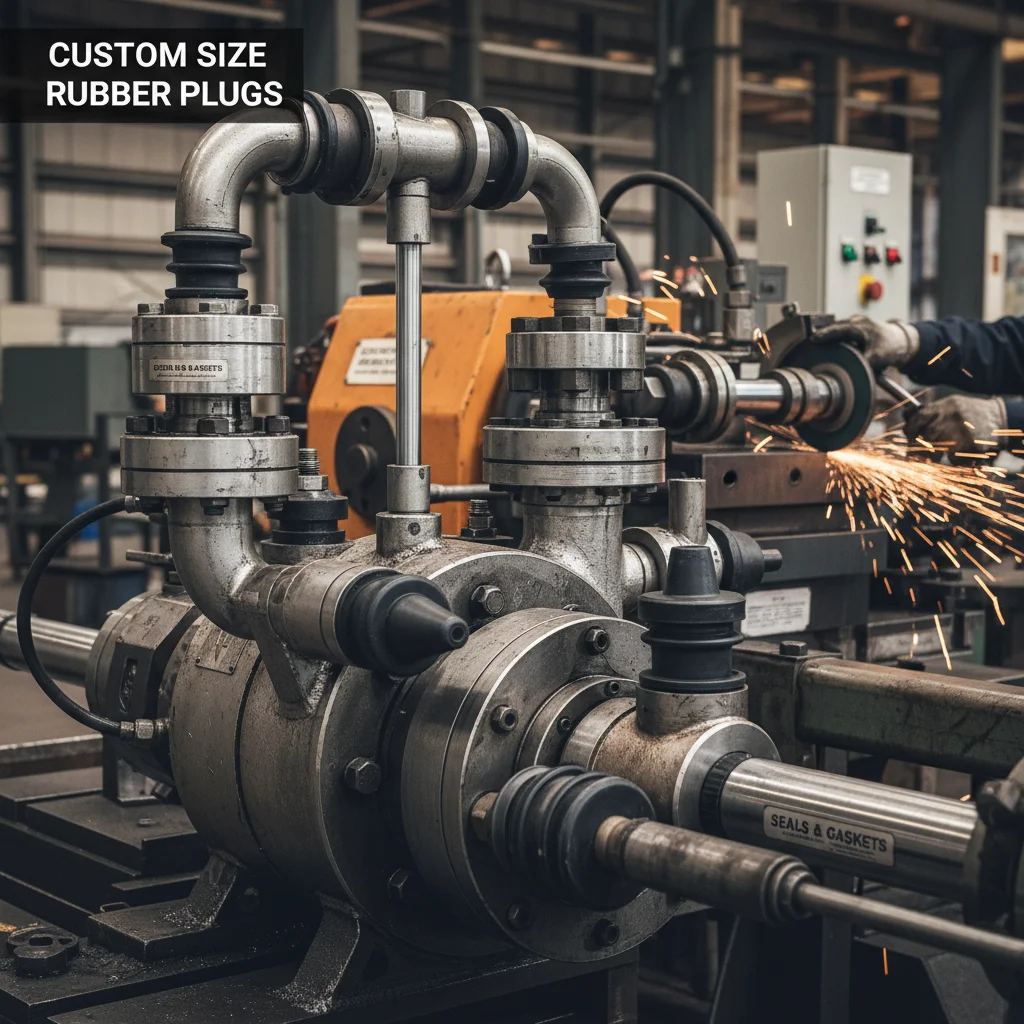
The global automotive industry relies heavily on precision engineering to ensure vehicle safety, longevity, and performance. Among the most critical yet often overlooked components are the sealing systems that prevent fluid leaks and protect internal mechanisms from environmental contaminants. The integration of high-performance materials has transformed how these systems operate, moving toward more durable and heat-resistant solutions.
As automotive engines and hydraulic systems operate under increasingly extreme pressures and temperatures, the demand for specialized sealing materials has surged. Failure in a single seal can lead to catastrophic engine failure or environmental hazards, making the selection of the right elastomer a priority for manufacturers. The shift toward electric vehicles (EVs) is also introducing new challenges, requiring seals that can handle different chemical compositions and thermal profiles.
Understanding the technical nuances of Automotive Rubber Seals is essential for ensuring operational reliability. By leveraging advanced materials like FFKM (Perfluoroelastomer), industry professionals can achieve superior chemical resistance and thermal stability, ensuring that critical components remain protected under the most demanding static or moving conditions.

The Technical Essence of High-Performance Seals
At its core, a high-performance rubber seal ring is an annular cover designed to form a precise labyrinth gap. This structure is strategically fixed on a bearing ring or washer, creating a critical barrier that prevents the leakage of essential lubricants and oils while simultaneously blocking the entry of foreign objects like dust and moisture.
These components are engineered to function across a wide spectrum of environments, whether they are installed in static positions or subjected to continuous movement. By maintaining a tight seal under specified temperature and pressure ranges, they protect the mechanical integrity of various industrial and automotive systems.
Global Industry Standards and Material Requirements
The global manufacturing landscape adheres to rigorous ISO and ASTM standards to ensure that sealing components can withstand the harsh realities of automotive operation. In an era where efficiency is paramount, the move toward FFKM (Perfluoroelastomer) represents a significant leap in material science, offering unmatched resistance to aggressive chemicals and extreme heat.
Industry data suggests that seal failure is one of the leading causes of unplanned downtime in mechanical equipment. Consequently, the focus has shifted from basic rubber compounds to engineered polymers that maintain their elasticity and sealing force even after thousands of thermal cycles.
This evolution is driven by the need for lower emissions and higher fuel efficiency, which often requires engines to run hotter. The ability of a seal to maintain its shape and function at elevated temperatures is no longer just a preference but a regulatory necessity for global automotive compliance.
Critical Factors in Seal Selection and Durability
When selecting Automotive Rubber Seals, the hardness of the material—measured in Shore A (Sha)—is a deciding factor. Depending on the application, hardness levels ranging from 40 to 80 Sha are utilized to balance the need for flexibility with the requirement for structural rigidity.
The chemical compatibility of the seal is equally vital. For instance, using FFKM ensures that the Automotive Rubber Seals do not degrade when exposed to synthetic oils, fuels, or corrosive gases, which would otherwise lead to premature hardening and leakage.
Furthermore, the installation environment—whether it is a static seal or a dynamic moving part—determines the wear rate. High-quality Automotive Rubber Seals are designed to minimize friction, reducing heat buildup and extending the service life of the associated bearings and washers.
Performance Metrics of Advanced Elastomers
Evaluating the effectiveness of a seal requires a quantitative approach to material performance. Factors such as compression set, tensile strength, and thermal elongation are measured to ensure the part performs consistently across its entire lifecycle.
By comparing different rubber grades, engineers can determine the optimal balance between cost and performance. While standard rubber suffices for low-temperature zones, high-heat zones demand the specialized properties of FFKM to prevent catastrophic failure.
Performance Ratings of Different Sealing Materials
Real-World Applications in Mechanical Equipment
The versatility of heat-resistant rubber seals allows them to be deployed across a vast array of mechanical systems. From engine manifolds and transmission housings to hydraulic pumps and pneumatic actuators, these seals ensure that fluids stay contained and contaminants stay out.
In heavy-duty industrial zones and remote mining operations, where maintenance is difficult and costly, the use of FFKM seals is critical. These components reduce the frequency of replacements, ensuring that machinery continues to operate in harsh, dusty, and chemically volatile environments without failure.
Long-Term Value and Reliability Benefits
Investing in premium sealing solutions provides tangible long-term financial benefits. While the initial cost of advanced materials like FFKM may be higher than standard rubber, the reduction in downtime and the extension of the overall equipment lifecycle lead to a much lower total cost of ownership.
Beyond the financial aspect, there is a significant safety component. Reliable seals prevent the leakage of flammable fluids and hazardous gases, protecting both the operators and the environment. This reliability builds trust between the manufacturer and the end-user, ensuring a reputation for quality and safety.
Furthermore, the precision of a well-manufactured seal reduces friction and energy loss within a system. This slight increase in efficiency, when scaled across thousands of vehicles or machines, contributes to a meaningful reduction in energy consumption and a smaller carbon footprint.
Future Trends in Sealing Technology
The future of sealing technology is moving toward "smart" materials and extreme sustainability. We are seeing the emergence of polymers that can signal their own wear levels or automatically adjust their sealing pressure based on thermal expansion, reducing the need for manual inspections.
Digital transformation is also impacting the manufacturing process. Through 3D printing and advanced molding simulations, custom rubber parts can now be prototyped and tested in virtual environments, ensuring a perfect fit and function before a single piece of material is cast.
As the industry pivots toward green energy, the development of biodegradable yet high-performance elastomers is becoming a priority. The goal is to create seals that offer the same durability as FFKM but leave no toxic residue at the end of their lifecycle.
Comparative Analysis of Seal Performance across Different Operating Environments
| Environment Type |
Recommended Material |
Thermal Stability |
Service Life Score |
| Engine Combustion Zone |
FFKM (Heat Resistant) |
Excellent |
9.5 |
| Hydraulic Fluid Lines |
FKM / Nitrile |
Good |
8.0 |
| Exterior Weather Strips |
EPDM |
Moderate |
7.0 |
| Chemical Processing Unit |
FFKM |
Excellent |
9.8 |
| Cooling System Pipes |
Silicone / NBR |
Moderate |
6.5 |
| Transmission Gaskets |
FKM |
High |
8.5 |
FAQS
The primary advantage of FFKM is its near-universal chemical resistance and superior thermal stability. Unlike standard rubber, which may degrade or harden when exposed to aggressive chemicals or extreme heat, FFKM maintains its structural integrity and sealing properties, making it ideal for high-stress automotive and industrial environments.
Shore A hardness determines the seal's ability to deform and create a tight interface. A lower hardness (e.g., 40 Sha) allows the seal to conform to irregular surfaces, which is great for low-pressure applications. A higher hardness (e.g., 80 Sha) provides better resistance to extrusion and high-pressure forces, preventing the seal from being squeezed out of its housing.
Yes, high-performance rubber seals are designed for both. In static applications, they prevent leaks between two stationary parts. In dynamic applications, they maintain a seal while one part rotates or slides. However, dynamic seals generally require materials with lower friction coefficients to prevent premature wear.
The most common causes include thermal degradation (exposure to heat beyond the material's limit), chemical attack (incompatibility with oils or gases), and mechanical wear (friction or improper installation). Using an incorrect hardness or material grade for the specific environment often accelerates these failures.
Delivery depends on stock and tooling. Products in stock usually ship within 1 workday. If the product is out of stock but the mold is available, delivery takes 5–7 workdays. For completely custom parts where a new mold is required, the process typically takes 10–15 workdays, depending on the order quantity.
Yes, all high-performance seals undergo 100% testing before delivery to ensure they meet the specified dimensions, hardness, and quality standards. This rigorous quality control process minimizes the risk of on-site failure and ensures immediate operational readiness.
Conclusion
The role of Automotive Rubber Seals extends far beyond simple leak prevention; they are the silent guardians of mechanical efficiency and safety. By integrating advanced materials like FFKM and adhering to precise hardness specifications, manufacturers can drastically reduce equipment downtime and enhance the longevity of critical systems. The balance between material science and precision engineering is what ultimately determines the reliability of a vehicle or machine.
Looking forward, the shift toward smarter, more sustainable elastomers will continue to redefine industry standards. For those seeking to optimize their mechanical systems, prioritizing high-grade sealing solutions is the most effective way to ensure long-term performance and operational security. We invite you to explore our full range of precision sealing solutions to find the perfect fit for your technical requirements. Visit our website: www.beikesealing.com