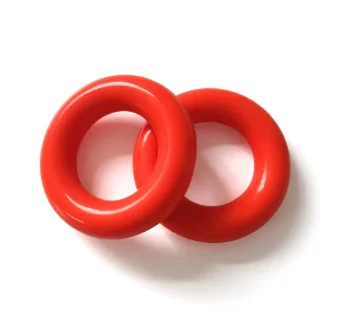
In the demanding landscape of modern industrial manufacturing, the integrity of mechanical components often depends on the smallest details. Dustproof Rubber Seals serve as the critical first line of defense, preventing the ingress of abrasive particulates and contaminants that can lead to premature wear and catastrophic equipment failure. By maintaining a tight barrier, these components ensure that internal lubricants remain pure and moving parts operate without friction-induced degradation.
Across global sectors ranging from automotive engineering to heavy-duty aerospace applications, the need for high-performance sealing solutions has never been more acute. The challenge lies in finding materials that can withstand extreme temperature fluctuations and chemical exposure while maintaining a consistent seal. Without effective protection, industrial machinery faces increased downtime and higher maintenance costs, making the selection of the right sealing material a strategic operational decision.
Understanding the technical specifications of Dustproof Rubber Seals is essential for engineers aiming to optimize the lifespan of their machinery. From FFKM O-rings designed for extreme heat to labyrinth-gap seals that block foreign objects, these components are engineered to function under both static and moving conditions. By leveraging advanced elastomer chemistry, industries can ensure their equipment remains operational in the harshest environments.

The Technical Mechanism of Dustproof Rubber Seals
At its core, a dust seal is an annular cover designed to create a narrow labyrinth gap. This specific geometry is engineered to prevent the leakage of internal oil while simultaneously blocking external foreign objects from entering the bearing or housing. By fixing the seal to a ring or washer, the component creates a physical barrier that resists the penetration of dust, grit, and moisture, which is vital for the longevity of precision mechanical equipment.
The effectiveness of these seals depends heavily on their ability to maintain contact under varying pressure and temperature conditions. Whether the equipment is in a static state or subject to high-speed rotation, the elastomer must retain its shape and elasticity. This ensures that the narrow gap remains closed, protecting the internal components from the abrasive effects of environmental contaminants.
Global Industry Standards and Material Requirements
The global demand for high-performance seals is driven by strict ISO and industry-specific standards that mandate zero-failure rates in critical applications. In sectors such as chemical processing and aerospace, materials like FFKM (Perfluoroelastomer) are preferred due to their exceptional heat resistance and chemical inertness. These materials ensure that the seal does not degrade when exposed to aggressive solvents or extreme thermal cycles, maintaining the structural integrity of the machinery.
Material hardness, often measured in Shore A (such as 40, 50, 60, 70, or 80 Sha), plays a pivotal role in determining the seal's performance. A softer seal may provide a better fit for low-pressure applications, while a harder seal is necessary for high-pressure environments where deformation must be minimized. Selecting the correct hardness is a balance between achieving a tight seal and reducing frictional heat during operation.
Furthermore, the ability to seal different liquids and gases under specified temperatures is a benchmark for quality. Modern manufacturing focuses on the synergy between the seal geometry and the elastomer's chemical properties. This ensures that the component can withstand the harsh realities of industrial use, from freezing arctic conditions to the intense heat of an engine manifold.
Critical Design Factors for Effective Sealing
Designing a system around Dustproof Rubber Seals requires a deep understanding of the interaction between the seal and the mating surface. The surface finish of the shaft or housing must be optimized to prevent premature wear of the rubber. If the surface is too rough, it acts like sandpaper, eroding the seal; if it is too smooth, the seal may fail to retain the necessary lubricant film.
One of the most critical factors is the management of the labyrinth gap. By optimizing the annular cover's dimensions, engineers can create a path that is practically impassable for dust particles but allows for minimal friction. This balance is what allows Dustproof Rubber Seals to protect bearings and washers without significantly increasing the energy consumption of the machine.
Additionally, thermal expansion must be accounted for in the design phase. As materials heat up, they expand at different rates; a seal that is too tight at room temperature might cause excessive friction at operating temperature, while one that is too loose may leak. Utilizing heat-resistant elastomers ensures that the sealing force remains constant across the entire operational temperature range.
Performance Comparison of Seal Materials
When selecting the appropriate material for sealing, engineers must evaluate several key performance indicators including chemical compatibility, thermal stability, and wear resistance. Different elastomer grades are suited for different environments; for instance, standard rubber may suffice for basic dust protection, while FFKM is required for high-heat, chemically aggressive zones.
The following data illustrates the relative effectiveness of various sealing approaches based on common industrial performance metrics. By comparing these methods, it becomes clear that high-spec materials provide a significantly higher safety margin in extreme conditions.
Comparative Performance of Sealing Methods
Real-World Industrial Applications
In heavy industrial zones, such as mining and construction, equipment is constantly exposed to abrasive dust and mud. Here, the application of robust sealing rings is non-negotiable. These seals are installed on hydraulic cylinders and rotating shafts to prevent particulate matter from entering the internal chambers, which would otherwise cause scoring of the metal surfaces and lead to hydraulic fluid leaks.
Beyond heavy industry, these sealing solutions are critical in the food and pharmaceutical sectors. In these environments, food-grade silicone and specialized elastomers are used to ensure that the seals do not contaminate the product while remaining resistant to rigorous steam-cleaning processes. Whether it is a vacuum pump in a lab or a conveyor system in a factory, the ability to seal under moving conditions is paramount.
Long-Term Value and Operational Reliability
The long-term value of investing in high-quality Dustproof Rubber Seals manifests in the reduction of Total Cost of Ownership (TCO). While lower-grade seals may have a lower initial purchase price, their shorter lifespan leads to more frequent replacements and increased labor costs. High-performance FFKM seals, conversely, extend maintenance intervals and reduce the risk of unplanned shutdowns.
Reliability also translates directly into safety. In critical infrastructure, such as power plants or chemical refineries, a seal failure can lead to dangerous leaks or equipment explosions. By using components that are 100% tested before delivery, operators can have confidence that their systems will perform as expected under the most grueling pressures and temperatures.
Furthermore, the sustainability aspect cannot be ignored. Seals that last longer reduce the amount of industrial waste generated. By choosing durable materials that resist degradation, companies can lower their environmental footprint while simultaneously increasing their operational efficiency and trust with their end clients.
Future Innovations in Sealing Technology
The future of sealing technology is moving toward "smart" materials and advanced composite elastomers. We are seeing the integration of nano-fillers into rubber compounds to enhance tear strength and thermal conductivity, allowing seals to dissipate heat more efficiently during high-speed rotation. This evolution will further extend the life of Dustproof Rubber Seals in high-performance electric vehicles and aerospace turbines.
Digital transformation is also impacting how these components are managed. Predictive maintenance, powered by AI, can now analyze vibration and temperature data to predict exactly when a seal is likely to fail. This allows for "just-in-time" replacement, eliminating the waste of replacing parts too early and the risk of replacing them too late.
Moreover, the push toward green energy is driving the development of bio-based elastomers that offer the same performance as petroleum-based rubber but with a fraction of the carbon footprint. As regulations tighten, the industry will pivot toward these sustainable materials without compromising the rigorous sealing standards required for industrial safety.
Comparative Analysis of Material Performance in Various Environments
| Material Type |
Temp Resistance |
Chemical Stability |
Wear Longevity |
| Standard NBR |
Moderate |
Oil Resistant |
Medium |
| FKM (Viton) |
High |
Very High |
High |
| FFKM |
Extreme |
Universal |
Very High |
| Silicone |
High |
Moderate |
Low |
| EPDM |
Moderate |
Weather Resistant |
Medium |
| Polyurethane |
Low |
Moderate |
Extreme |
FAQS
A dust seal is primarily designed to block external contaminants like dirt and grit from entering a system, often acting as a protector for an internal oil seal. While an oil seal's main job is to keep lubricants inside, the dust seal focuses on the ingress of foreign objects. In many high-performance assemblies, both are used together to ensure a complete barrier against the environment.
The choice depends on the operating pressure and the surface roughness of the mating part. For low-pressure applications where a tight conformable fit is needed, a lower hardness (e.g., 40-60 Sha) is ideal. For high-pressure or high-load environments where the seal must resist extrusion or deformation, a higher hardness (e.g., 70-80 Sha) is required to maintain the sealing force.
FFKM (Perfluoroelastomer) possesses a unique molecular structure that provides near-universal chemical resistance and the ability to withstand extreme temperatures that would melt or degrade standard rubbers. This makes it indispensable for aerospace, semiconductor manufacturing, and chemical processing where failure is not an option and temperatures frequently exceed the limits of FKM or NBR.
Delivery times vary based on availability. For products in stock, delivery can happen within 1 workday. If the product is out of stock but the mold is available, it typically takes 5-7 workdays. For entirely new custom designs requiring new molds, the timeline is generally 10-15 workdays, depending on the order quantity and complexity.
Yes, high-quality seals are engineered for both. Static seals prevent leakage in non-moving joints, while dynamic seals are designed to maintain a barrier while a shaft rotates or reciprocates. The key is the material's elasticity and the design of the labyrinth gap, which minimizes friction during movement while maintaining a tight seal.
To ensure maximum reliability, a 100% test protocol is implemented before delivery. This includes dimensional inspection to ensure a perfect fit, hardness verification using a durometer, and visual inspections for surface defects. This rigorous process ensures that every component meets the specified technical parameters and industry standards.
Conclusion
In summary, the strategic implementation of high-performance sealing solutions is fundamental to the operational success of any industrial enterprise. By focusing on the precise synergy between material hardness, thermal resistance, and the geometry of the labyrinth gap, companies can effectively eliminate the risk of contaminant ingress. From the extreme durability of FFKM O-rings to the versatile application of dust seals in rotating machinery, these components ensure that precision parts remain protected, lubricants stay pure, and equipment downtime is minimized.
Looking forward, the integration of smart materials and sustainable elastomer chemistry will redefine the standards of mechanical protection. We encourage engineers and procurement managers to move beyond viewing seals as simple consumables and instead recognize them as critical assets in the pursuit of operational excellence. For those seeking customized, high-precision sealing solutions that guarantee reliability in the harshest conditions, visit our website: www.beikesealing.com.