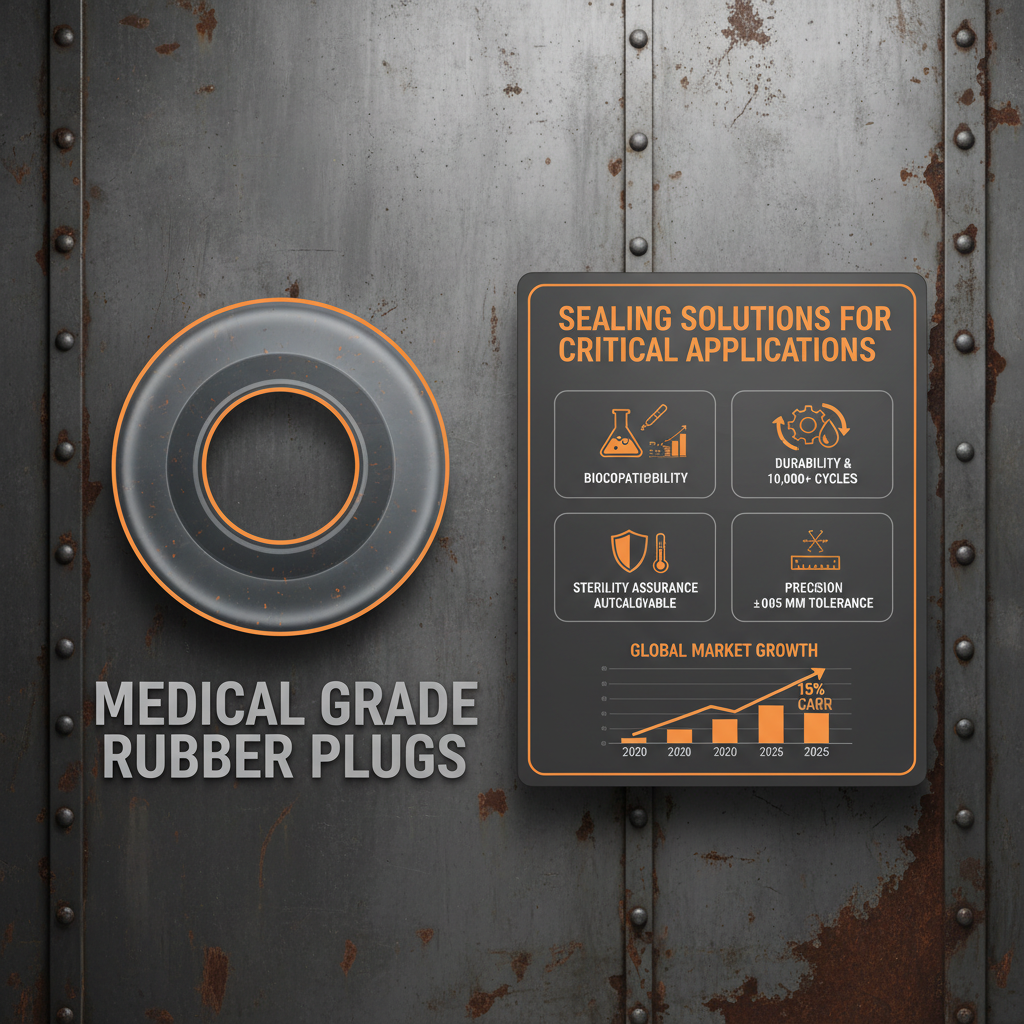
In the precision-driven world of healthcare and pharmaceuticals, the integrity of containment is non-negotiable. Medical Grade Rubber Plugs serve as critical barriers, ensuring that life-saving medications, laboratory samples, and sterile equipment remain uncontaminated by external pollutants. These specialized components are engineered to meet rigorous biocompatibility standards, bridging the gap between industrial rubber manufacturing and clinical safety.
The global demand for high-performance sealing solutions has surged as medical device complexity increases. From simple vial closures to intricate components in diagnostic machinery, the role of these plugs is to provide a hermetic seal that withstands extreme sterilization processes, such as autoclaving and gamma irradiation. Understanding the material science behind these components is essential for manufacturers aiming to minimize risk and maximize patient safety.
Beyond simple occlusion, modern medical rubber technology focuses on the intersection of elasticity, chemical inertness, and longevity. By leveraging advanced polymers like silicone and EPDM, the industry can now produce seals that prevent leakage even under fluctuating pressure and temperature. This guide explores the technical specifications, global applications, and future innovations surrounding these indispensable medical components.
Global Standards and Regulatory Context of Medical Grade Rubber Plugs
The production of Medical Grade Rubber Plugs is governed by stringent international frameworks, most notably ISO 10993 for biological evaluation of medical devices. These standards ensure that the materials used do not elicit an adverse systemic or local response when they come into contact with human tissue or pharmaceutical agents. In an era where global healthcare supply chains are interconnected, adherence to these norms is the only way to ensure cross-border compatibility and patient safety.
Furthermore, the FDA in the United States and the EMA in Europe enforce strict guidelines regarding the leaching of chemicals. The challenge lies in eliminating plasticizers and accelerators that could migrate from the rubber into the medicine, which could potentially alter the drug's efficacy or cause toxic reactions. This regulatory pressure drives the industry toward "clean-room" manufacturing and the use of high-purity polymers.
Defining the Technical Essence of Medical Grade Rubber Plugs
At its simplest, a medical grade rubber plug is a precision-engineered elastomer component designed to create a leak-proof seal in medical environments. Unlike industrial plugs, these are formulated with medical-grade polymers—such as platinum-cured silicone or specialized nitrile—that are specifically processed to be free of contaminants and toxins. They are the invisible guardians of sterility in everything from vaccine vials to dialysis machines.
The connection to modern humanitarian needs is profound; without reliable closures, the distribution of temperature-sensitive vaccines in developing regions would be nearly impossible. The ability of Medical Grade Rubber Plugs to maintain a vacuum or a sterile atmospheric barrier over long periods of storage is what allows global health organizations to reach remote populations effectively.
Technically, these plugs must balance hardness (Durometer) with flexibility. If a plug is too hard, it may fail to seal against a glass or plastic rim; if it is too soft, it may tear during insertion or fail to resist the pressure of a needle puncture. This delicate balance is achieved through precise vulcanization and compounding processes.
Core Components of Quality in Medical Rubber Seals
Biocompatibility is the cornerstone of Medical Grade Rubber Plugs. This ensures that the material is non-pyrogenic and non-toxic, preventing inflammatory responses when the plug is used in direct or indirect contact with patients. This is achieved by selecting raw materials that have undergone rigorous purity testing.
Sterilization Resistance is equally critical. Medical Grade Rubber Plugs must withstand repeated cycles of steam autoclaving, ethylene oxide (EtO) gas, or gamma radiation without losing their physical properties. A failure in material integrity during sterilization could lead to microscopic cracks, compromising the entire sterile barrier.
Chemical Inertness ensures that the plug does not react with the contents of the container. Whether the substance is a highly acidic medication or a volatile solvent, the rubber must remain stable. This prevents the degradation of the drug and ensures that the plug does not swell or degrade over the product's shelf life.
Performance Metrics for Medical Grade Rubber Plugs
Evaluating the efficacy of these components requires a data-driven approach. Manufacturers typically measure performance across several dimensions: compression set (the ability to return to original shape), tensile strength, and gas permeability. For Medical Grade Rubber Plugs, a low compression set is vital for long-term sealing reliability.
When comparing different material formulations, the industry often uses a scoring system to determine the best fit for a specific medical application, ranging from short-term skin contact to permanent implantation.
Material Performance Comparison for Medical Rubber Components
Real-World Global Applications and Use Cases
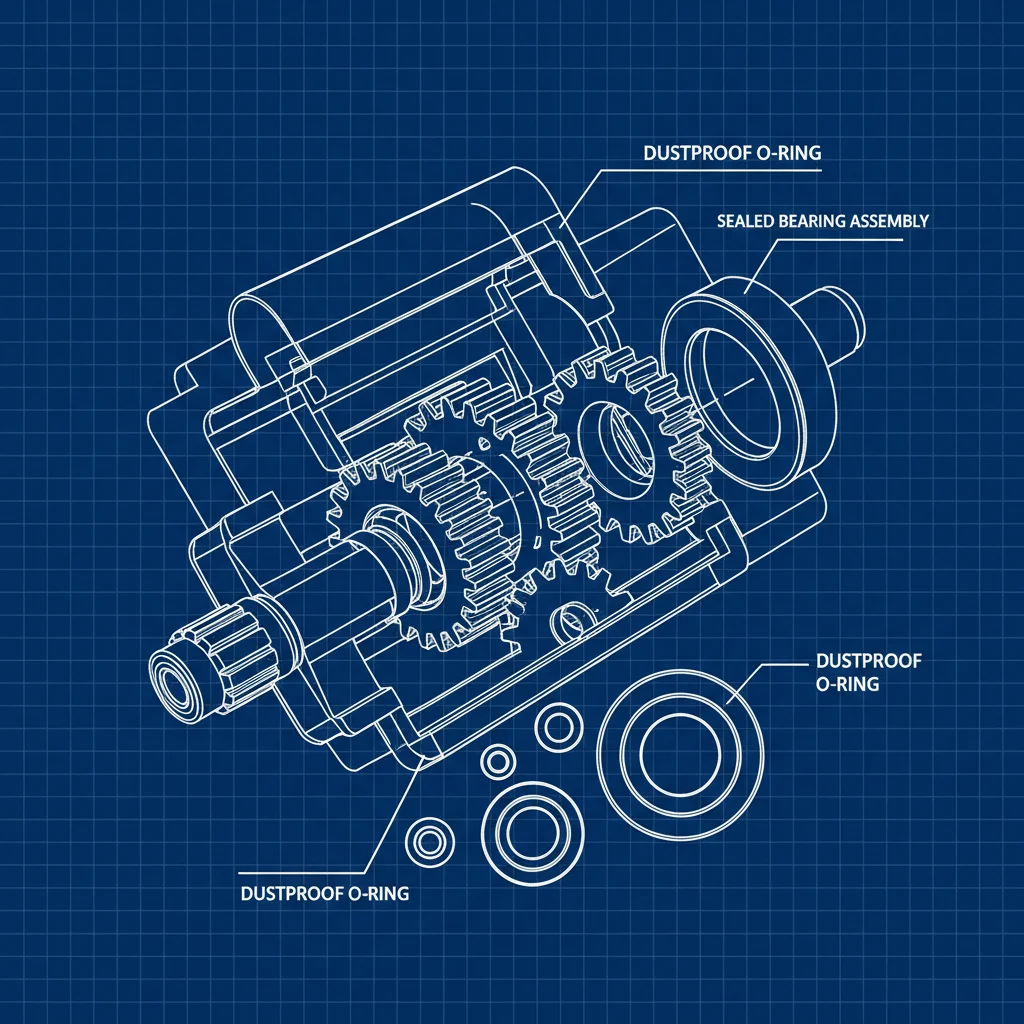
The versatility of Medical Grade Rubber Plugs allows them to be used across a vast spectrum of medical disciplines. In pharmaceutical packaging, they are used as stoppers for vials, where they must allow for repeated needle penetration (self-sealing) without leaking. In surgical instruments, they serve as dust caps and port seals, protecting sterile channels from the hospital environment.
Beyond hospitals, these components are vital in remote industrial zones where diagnostic kits are deployed for disease screening. For example, in post-disaster relief operations, portable blood testing kits rely on these plugs to keep reagents stable despite extreme humidity and temperature swings. Their reliability ensures that diagnostic accuracy is maintained even in the most challenging field conditions.
Long-Term Value and Reliability Advantages
Investing in high-quality Medical Grade Rubber Plugs provides immense long-term value by drastically reducing the risk of product recalls. A single batch of contaminated medication due to seal failure can cost a pharmaceutical company millions of dollars and, more importantly, jeopardize patient lives. The reliability of a medical-grade seal is therefore an investment in risk mitigation and brand trust.
From a sustainability perspective, the move toward high-durability elastomers reduces waste. When plugs are engineered to withstand multiple sterilization cycles without degrading, the frequency of component replacement drops. This aligns with the modern healthcare trend of reducing single-use plastics where safe alternatives exist.
Ultimately, the value is emotional as well as logical. For a clinician, the confidence that a seal will hold during a critical procedure provides peace of mind. For a patient, it represents the dignity of receiving safe, uncontaminated care. This trust is built on the microscopic precision of the rubber compound and the rigor of the manufacturing process.
Future Innovations and Material Evolution
The future of Medical Grade Rubber Plugs is being shaped by the rise of "smart materials." Researchers are exploring elastomers embedded with sensors that can signal a breach in the seal or indicate when a plug has been tampered with. This digital transformation will bring an unprecedented level of security to the pharmaceutical supply chain.
Sustainability is also driving the development of bio-based elastomers. The industry is looking for ways to replace petroleum-derived rubber with sustainable, medical-grade polymers that maintain the same biocompatibility and mechanical strength. This shift toward "green chemistry" is becoming a priority for global health organizations aiming for carbon neutrality.
Automation in manufacturing, specifically additive manufacturing (3D printing) of elastomers, is allowing for the creation of complex, patient-specific plug geometries. This allows for a tighter fit in customized medical devices, further enhancing the sealing efficiency.
Comparative Analysis of Material Properties for Medical Rubber Plugs
|
Material Type
|
Sterilization Compatibility
|
Biocompatibility Level
|
Chemical Resistance
|
| Platinum Silicone |
Excellent (Autoclave/Gamma) |
Highest (Implantable) |
Moderate to High |
| Medical EPDM |
High (Steam/EtO) |
High (External/Mucosal) |
Excellent (Water/Acid) |
| Medical Nitrile |
Moderate (EtO) |
Moderate (Skin Contact) |
Excellent (Oils/Fuel) |
| Fluorocarbon (FKM) |
High (Thermal) |
High (Inert) |
Highest (Aggressive Solvents) |
| TPE (Medical Grade) |
Moderate (Gamma) |
High (Skin Contact) |
Moderate |
| Natural Rubber (Purified) |
Low to Moderate |
Moderate (Allergy Risk) |
Moderate |
FAQS
The primary difference lies in the purity of the materials and the manufacturing environment. Medical Grade Rubber Plugs are made from biocompatible elastomers that are free from toxic accelerators and plasticizers. They are produced in clean-room environments to prevent particulate contamination and must comply with ISO 10993 standards, whereas industrial plugs are designed for mechanical performance without stringent biological safety requirements.
Yes, provided the correct material is selected. For instance, platinum-cured silicone Medical Grade Rubber Plugs can withstand repeated autoclave cycles without losing their elasticity or sealing properties. However, some TPE or natural rubber compounds may degrade over time with repeated heat exposure, so it is critical to match the material to the specific sterilization protocol.
Leaching is prevented through the use of high-purity polymers and specialized curing processes. Manufacturers eliminate low-molecular-weight species and avoid the use of hazardous vulcanizing agents. Additionally, a "washing" or "leaching" process is often performed where the Medical Grade Rubber Plugs are rinsed with purified water or solvents to remove any surface residuals before they are sterilized and packaged.
Silicone is generally the best choice for self-sealing applications. Due to its high elasticity and low compression set, silicone Medical Grade Rubber Plugs can effectively "close" the hole left by a needle after it is withdrawn, maintaining the sterile barrier. Chlorobutyl rubber is another industry standard for vial stoppers due to its excellent gas impermeability and puncture recovery.
No, compatibility depends entirely on the elastomer chemistry. While silicone is great for many applications, it may swell when exposed to certain organic solvents. For highly aggressive chemicals, Fluorocarbon (FKM) Medical Grade Rubber Plugs are recommended due to their superior chemical inertness. Always consult a material compatibility chart before selecting a plug for solvent-based medications.
You should request a Certificate of Analysis (CoA) and a Material Safety Data Sheet (MSDS) for each batch. Specifically, look for documentation proving compliance with ISO 10993 and USP Class VI standards. A reputable supplier of Medical Grade Rubber Plugs will be able to provide traceability records from the raw material source to the final finished product.
Conclusion
In summary, Medical Grade Rubber Plugs are far more than simple closures; they are precision instruments of safety that ensure the efficacy of pharmaceutical products and the sterility of medical devices. By balancing biocompatibility, sterilization resistance, and chemical inertness, these components protect patients and streamline healthcare delivery on a global scale. The integration of rigorous ISO standards and advanced material science ensures that these seals can perform under the most demanding clinical conditions.
Looking forward, the transition toward bio-based materials and smart-sealing technologies will further enhance the sustainability and security of medical containment. For manufacturers and procurement officers, the priority must remain on sourcing components that offer verified traceability and uncompromising quality. Ensuring the highest standard of sealing today is the best way to prevent the clinical failures of tomorrow.