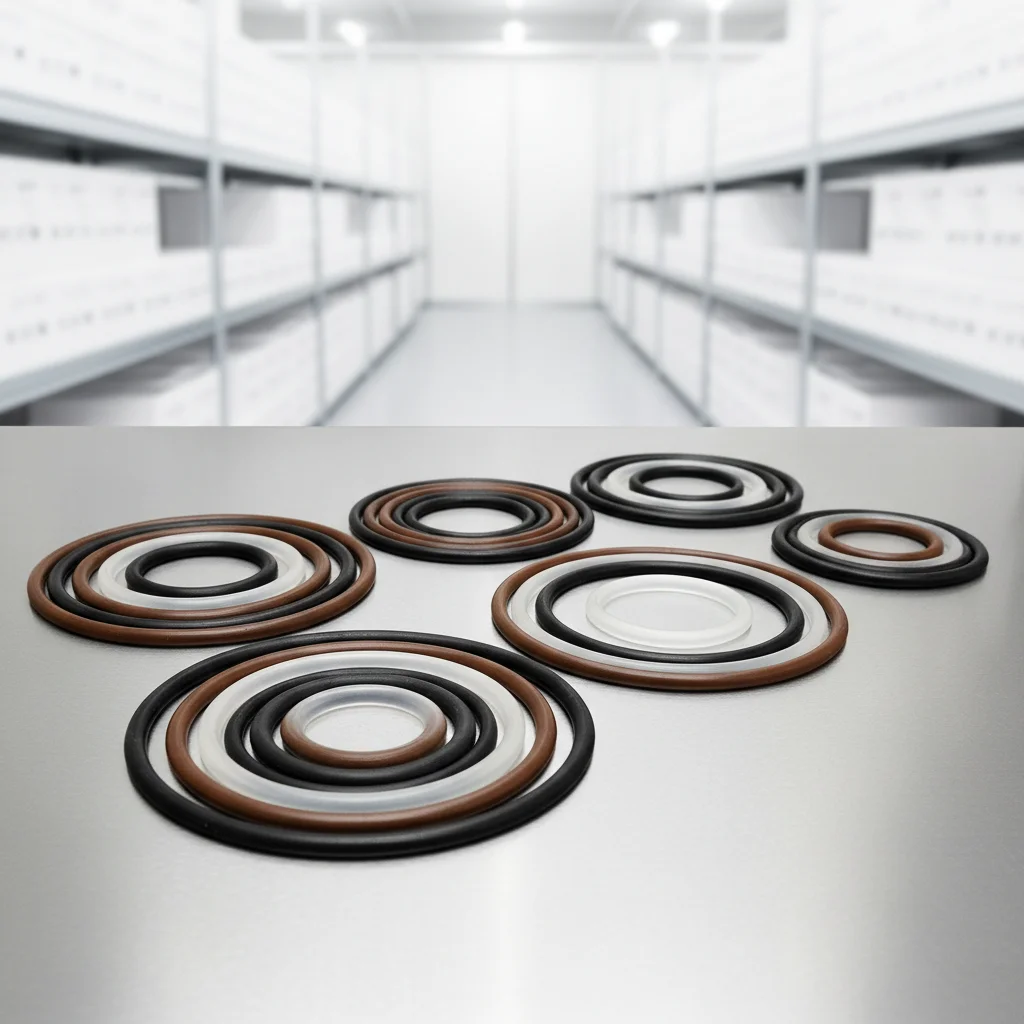
Selecting a sealing component for medical devices is not merely a matter of size and shape, but a critical decision regarding biocompatibility and patient safety. When a failure occurs in a medical environment, the consequences range from device malfunction to severe contamination, making the specification of materials the most vital step in the engineering process.
The shift toward more complex surgical instruments and diagnostic equipment has pushed the demand for components that can withstand rigorous sterilization cycles—such as autoclaving and gamma radiation—without leaching harmful chemicals. This environment requires a specialized approach to rubber compounding and precision molding to ensure that every seal maintains its integrity under extreme physiological or chemical stress.
Understanding the technical nuances of Medical Grade Custom O-Rings allows engineers to balance mechanical performance with stringent regulatory compliance, ensuring that the final device is both effective and safe for clinical use.

Material Foundations for Biocompatibility

The core of medical-grade sealing lies in the purity of the polymer. Unlike industrial rubber, medical elastomers must be formulated to avoid additives that could cause cytotoxic reactions. For instance, USP Class VI rubber and RoHS-compliant materials are often the baseline for any component that comes into contact with human tissue or fluids.
Silicone (VMQ) remains a dominant choice due to its inherent thermal stability and low toxicity. However, for applications requiring high chemical resistance—such as those involving aggressive pharmaceutical solvents—fluorocarbon (FKM) or FFKM may be necessary. The challenge for manufacturers is to achieve these properties without compromising the seal's flexibility or creating "blooming" (the migration of additives to the surface).
Critical Design Factors for Medical Seals
Designing a custom seal for medical use begins with the interaction between the rubber and the housing. Compression set is a vital metric; if a seal permanently deforms after a period of use, it loses its ability to maintain a leak-proof barrier, which in a medical ventilator or pump could lead to systemic failure.
Tolerance control is equally critical. In miniaturized medical devices, a variance of a few microns can be the difference between a secure fit and a catastrophic leak. This requires the use of high-precision molds and controlled curing processes to ensure that the final dimensions of the O-ring are consistent across thousands of units.
Beyond geometry, surface finish plays a role in preventing biofilm accumulation. A smoother surface reduces the areas where bacteria can adhere, which is essential for components used in dialysis machines or surgical fluid delivery systems.
Sterilization Impact and Material Fatigue
Sterilization is perhaps the most aggressive environment a medical seal will encounter. Whether through steam autoclaving, ethylene oxide (EtO) gas, or gamma irradiation, the process can alter the molecular structure of the elastomer, leading to embrittlement or excessive softening.
The primary risk in medical sealing is "material degradation via repeated thermal cycling," where the elastomer loses its elastic recovery, leading to a gradual loss of sealing force that is often undetectable until a leak occurs.
To mitigate this, engineers must select materials based on the specific sterilization method used. For example, while silicone handles autoclave heat exceptionally well, certain nitrile rubbers may degrade quickly. Understanding this relationship prevents the premature failure of devices in high-turnover clinical settings.
Evaluating Polymer Performance Indices
When evaluating elastomers for medical use, a qualitative scoring model is often used to determine the suitability of a material for a specific environment. This index considers factors such as hardness (Durometer), thermal range, and chemical compatibility.
For instance, a silicone seal might score high on thermal resistance and biocompatibility but lower on tear strength compared to an EPDM or NBR seal. The goal is to find the "sweet spot" where the material meets the minimum safety threshold while maximizing operational longevity.
Figure 2. Relative Performance Index of Common Medical Elastomers
Clinical Application Scenarios
In a typical industrial setting, such as the production of hemodialysis equipment, the seals must be entirely inert to avoid contaminating the blood path. Here, food-grade or USP Class VI silicone is often utilized for its extreme purity and ability to maintain a seal during high-pressure fluid transport.
Conversely, in surgical robotic tools, the seals may face combined stresses of mechanical friction and chemical disinfection. In these cases, customized rubber parts with higher durometer ratings (e.g., 70 Shore A) are required to prevent the seal from being extruded or torn during the rapid movement of the robotic arm.
Trends in High-Purity Elastomers
The industry is moving toward "encapsulated" sealing solutions. By wrapping a high-performance elastomer in a thin layer of PTFE, manufacturers can combine the sealing force of rubber with the near-universal chemical resistance of Teflon. This is becoming increasingly common in pharmaceutical dosing pumps.
Another significant shift is the integration of digital quality tracking. Using unique mold identifiers and batch-level material certifications, manufacturers can provide full traceability from the raw polymer supplier to the final medical device, which is a requirement for newer FDA and EMA regulatory frameworks.
Furthermore, there is a growing focus on reducing the environmental impact of medical rubber production without compromising safety, leading to the development of more efficient curing processes that reduce VOC emissions and energy consumption.
Selection Framework for Medical Grade Rubbers
Selecting the right seal involves a series of trade-offs. A material that is highly resistant to chemicals may be too rigid for a low-pressure application, while a very soft seal may lack the durability needed for a long-term implantable device.
The decision process should always begin with the "most restrictive" requirement—usually biocompatibility or chemical compatibility—and then work backward to mechanical properties like hardness and compression set.
By using a structured comparison, engineers can avoid the common mistake of over-specifying a material (which increases cost) or under-specifying (which increases risk).
| Material Type | Sterilization Suitability | Chemical Resistance | Biocompatibility Index |
|---|---|---|---|
| Medical Silicone | High (Autoclave) | Moderate | Excellent |
| EPDM (Medical) | Moderate | High (Alkaline) | Good |
| NBR (Medical) | Low | High (Oils) | Moderate |
| FKM/Viton | Moderate | Excellent | Good |
| FFKM | High | Universal | Moderate |
| PTFE Encapsulated | Excellent | Universal | Excellent |
Questions & Answers
Medical grade rubber is defined by its strict adherence to biocompatibility standards, such as USP Class VI or ISO 10993. Unlike industrial rubber, it is formulated without toxic accelerators, plasticizers, or fillers that could leach into the body or contaminate a sterile field. The manufacturing process also involves cleaner environments and rigorous batch testing to ensure the absence of particulate contamination.
Silicone (VMQ) is generally the best choice for repeated autoclaving due to its high thermal stability and resistance to hydrolysis. It maintains its physical properties across a wide temperature range (-60°C to +230°C) and does not become brittle after multiple steam sterilization cycles. For extreme cases involving higher temperatures or chemicals, FFKM may be considered, although it is significantly more expensive.
Durometer affects the balance between sealing force and durability. A lower durometer (e.g., 40-50 Shore A) allows the seal to conform easily to irregular surfaces, providing a tight seal at low pressures. A higher durometer (e.g., 70 Shore A) is necessary for high-pressure applications to prevent the rubber from being pushed into the gap (extrusion) and to provide better resistance to abrasion and tearing.
No, cleaning is insufficient. Industrial NBR often contains additives and processing oils that are inherently cytotoxic or non-biocompatible. Even if the surface is cleaned, these chemicals can migrate from the core of the rubber over time. Only rubber that is compounded from the start to meet medical standards (e.g., RoHS, USP Class VI) should be used in clinical devices.
Custom molding allows for the optimization of the seal geometry to match the specific hardware of a device, which reduces the required compression and extends the life of the seal. It also enables the use of specialized materials tailored to the exact chemical and thermal requirements of the device, rather than relying on a "one size fits all" standard material that may be over-engineered or slightly under-performing.
A common misconception is that encapsulated seals are as flexible as pure rubber. While they offer superior chemical resistance, the PTFE jacket adds stiffness and can potentially crack if the seal is over-compressed or subjected to extreme bending. Therefore, they should be used for static or low-movement seals where chemical inertness is the absolute priority over extreme elasticity.
Final Thoughts
The integrity of a medical device is often dependent on the smallest of its components. Ensuring that Medical Grade Custom O-Rings are specified based on a rigorous analysis of biocompatibility, sterilization needs, and mechanical stress is the only way to guarantee patient safety and device reliability.
As healthcare technology continues to miniaturize and move toward more aggressive treatment modalities, the role of precision rubber engineering will only grow. By focusing on material purity and dimensional accuracy, manufacturers can create sealing solutions that not only meet today's regulatory standards but also anticipate the challenges of tomorrow's clinical environments.