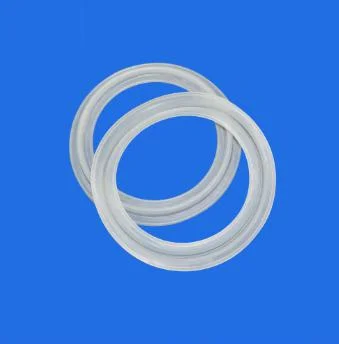
When a single millimeter of failure can lead to catastrophic system leaks or equipment corrosion, the selection of Waterproof O-Rings becomes a critical engineering decision rather than a simple procurement task. In high-pressure environments, the intersection of material science and precision geometry determines whether a seal maintains its integrity or fails under thermal and chemical stress.
For industries ranging from aerospace to food processing, waterproofing isn't just about blocking water; it is about managing the interaction between elastomers and the specific media they contain. Choosing between NBR, FKM, or Silicone requires a deep understanding of the operating temperature and the chemical compatibility of the surrounding environment.
This guide examines the technical nuances of high-performance sealing, moving beyond basic definitions to explore how material selection and design tolerances directly impact the lifecycle and reliability of industrial fluid systems.

The Fundamental Mechanism of Waterproof Sealing

Waterproof O-Rings function on the principle of controlled deformation. When the ring is compressed between two hard surfaces, the material is squeezed, creating a tight seal that prevents the passage of fluids. This process relies heavily on the "squeeze" or compression percentage; too little leads to leaks, while too much can cause permanent deformation or material failure.
Beyond simple compression, the internal pressure of the fluid actually assists the seal. As the pressure increases, it pushes the elastomer further against the sealing gland, enhancing the waterproof barrier. This self-energizing characteristic is what makes O-rings the industry standard for both static and dynamic applications.
However, the effectiveness of this mechanism is limited by the surface finish of the mating parts. Microscopic grooves or imperfections in the metal housing can provide leak paths, meaning that high-performance seals must be paired with precision-machined grooves to ensure a true hermetic seal.
Critical Material Selection for Extreme Environments
Selecting the wrong elastomer is the primary cause of seal failure in industrial settings. While NBR (Nitrile) is excellent for oil and fuel resistance at moderate temperatures, it fails rapidly when exposed to ozone or extreme heat. Conversely, EPDM offers superior weather and steam resistance but swells and degrades almost immediately when in contact with petroleum oils.
For high-temperature or chemically aggressive environments, FKM (Fluoroelastomer) and FFKM (Perfluoroelastomer) are the gold standards. FKM provides exceptional resistance to heat and chemicals, whereas FFKM offers near-universal chemical compatibility, making it essential for semiconductor and aerospace applications where zero leakage is non-negotiable.
Silicone (VMQ) fills the gap for food-grade and medical applications due to its biocompatibility and wide temperature range. The trade-off, however, is lower mechanical strength and abrasion resistance compared to NBR or HNBR, necessitating a careful evaluation of whether the seal will face significant friction.
Industry-Specific Application Challenges and Solutions
In the automotive and petrochemical sectors, seals must withstand a volatile mix of temperature swings and hydrocarbon exposure. The use of HNBR (Hydrogenated Nitrile) is often the solution here, as it maintains the oil resistance of NBR while significantly increasing thermal stability and tensile strength.
The semiconductor industry presents a different challenge: purity. Any outgassing from the rubber seal can contaminate a wafer. This is why encapsulated O-rings or high-purity FFKM seals are deployed, ensuring that the waterproof barrier does not introduce microscopic pollutants into the production environment.
In food and beverage processing, the focus shifts to hygiene and regulatory compliance. Using LFGB or FDA-certified silicone ensures that seals are not only waterproof but also non-toxic and capable of withstanding frequent sterilization cycles with caustic cleaning agents.
Analyzing Sealing Efficiency and Material Performance
Measuring the performance of a seal involves evaluating its compression set—the tendency of the rubber to remain deformed after a load is removed. A high compression set indicates a loss of "memory," which eventually leads to a loss of sealing force and subsequent leakage.
When comparing standard industrial seals with precision-engineered waterproof solutions, the difference in longevity becomes apparent under thermal cycling. Specialized compounds are designed to maintain a consistent modulus of elasticity across a wider temperature spectrum, reducing the risk of "cold leaks."
Waterproof O-Rings Performance Metrics
The data indicates that while standard seals may perform adequately under ideal conditions, specialized high-grade materials significantly reduce leakage rates in extreme temperature and chemical environments, extending the mean time between failures (MTBF) for the entire assembly.
Practical Procurement and Installation Best Practices
Procuring seals requires more than just specifying a diameter. Engineers must define the Shore A hardness—ranging from 5 to 90—to ensure the seal is neither too soft (leading to extrusion) nor too hard (preventing a proper seal at low pressures).
During installation, lubrication is paramount. Using a compatible lubricant prevents the O-ring from twisting or shearing as it is inserted into the groove. It is critical to use lubricants that do not chemically react with the elastomer; for instance, using a petroleum-based grease on an EPDM seal will cause it to fail almost instantly.
Verification of the groove dimensions using a calibrated gauge is the final step in ensuring a waterproof result. Even a slight deviation in the groove width can lead to over-compression or a gap that allows fluid bypass, rendering the highest quality material useless.
Evolution of Elastomer Technology and Future Trends
The future of sealing technology is moving toward "smart materials" and hybrid composites. We are seeing an increase in the use of encapsulated seals, where a chemically inert outer layer (like PTFE) protects a resilient inner core, combining the chemical resistance of plastics with the sealing force of rubber.
Another trend is the move toward additive manufacturing for custom rubber parts. This allows for the creation of complex X-profile or Y-profile seals that can handle bidirectional pressure more effectively than a standard round O-ring, particularly in hydraulic and pneumatic systems.
As industries push toward higher efficiency, there is a growing demand for seals that can operate at 400°C and above. Innovations in perfluoroelastomer (FFKM) formulas are likely to expand the boundaries of what is possible in deep-sea exploration and high-temperature diffusion furnaces.
Comparative Decision Matrix for Seal Selection
When selecting a sealing solution, the trade-off between cost and performance must be quantified. While FFKM provides the highest reliability, its cost is exponentially higher than NBR, making it unsuitable for low-pressure, general-purpose applications.
The following matrix provides a technical comparison across the most common elastomers used in waterproof applications to assist in the procurement and design process.
| Material | Temp Range | Primary Resistance | Typical Application |
|---|---|---|---|
| NBR (Nitrile) | -40 to 120°C | Petroleum Oils / Water | General Hydraulic Seals |
| EPDM | -60 to 150°C | Steam / UV / Brake Fluid | Outdoor Weather-stripping |
| FKM (Viton) | -20 to 200°C | High Heat / Fuel / Acids | Chemical Process Piping |
| Silicone (VMQ) | -60 to 230°C | Vegetable Oil / Ozone | Food & Medical Devices |
| HNBR | -40 to 160°C | H2S / Oil / Heat | Automotive Timing Belts |
| FFKM | -20 to 320°C | Universal Chemicals | Semi-conductor Etching |
For those requiring a tailored approach, exploring custom rubber parts via www.beikesealing.com can provide access to specific formulas designed for unique environmental stressors that standard off-the-shelf rings cannot handle.
Frequently Asked Questions
Conclusion
Achieving a reliable waterproof seal is a balance of material chemistry, precise mechanical tolerances, and correct installation techniques. By moving away from a "one-size-fits-all" approach and instead analyzing the specific thermal and chemical stresses of the application, engineers can significantly reduce downtime and system failures.
Whether utilizing standard rubber products or investing in custom-engineered solutions, the priority must always be the long-term compatibility of the elastomer with its environment. Those evaluating high-performance sealing requirements can find detailed technical specifications and product categories available through www.beikesealing.com.