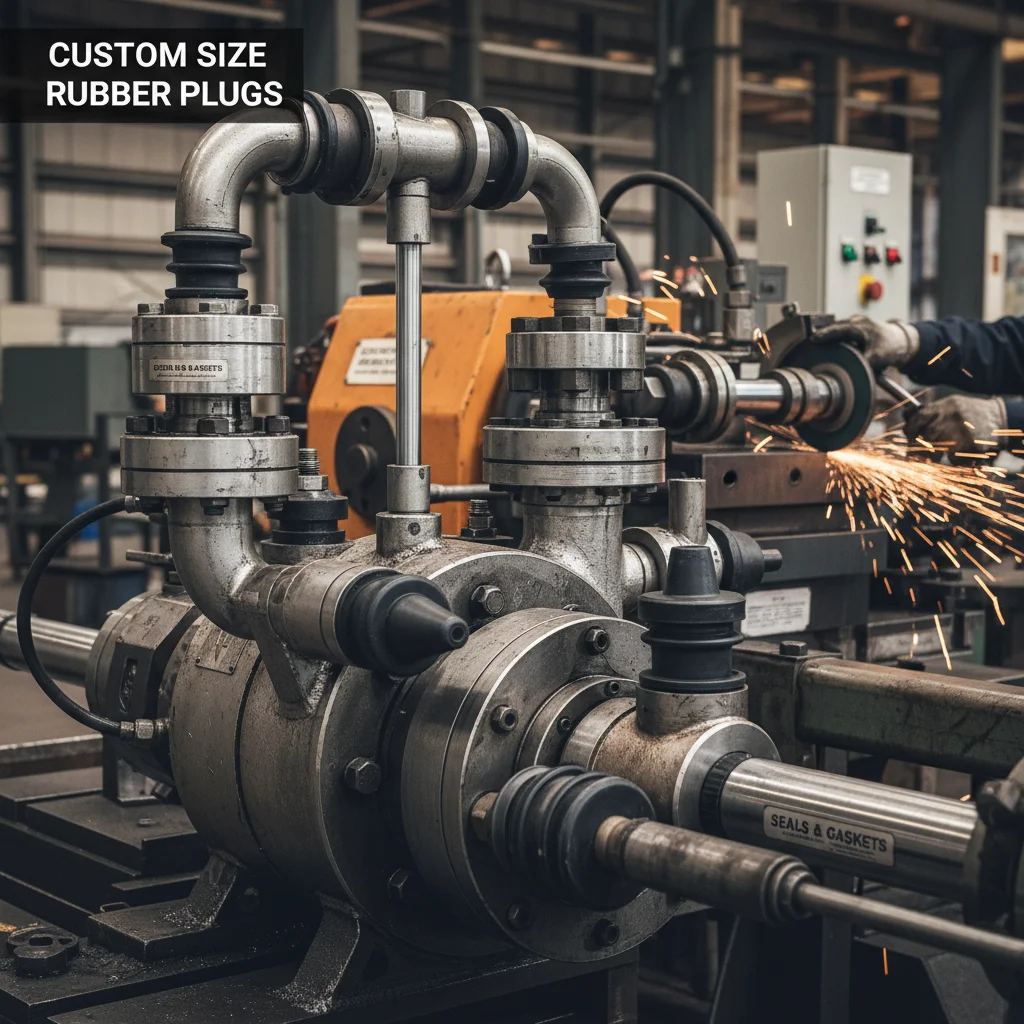
In the demanding world of industrial sealing, the integrity of a system often depends on the smallest components. High Pressure O-Rings serve as the critical line of defense against leaks in environments where extreme force and volatile media are the norm. From hydraulic systems to food processing machinery, these specialized seals ensure operational safety and prevent costly downtime.
The global shift toward higher efficiency and tighter tolerances has increased the reliance on advanced materials like VMQ silicone. When operating under significant pressure, a standard seal may fail, leading to catastrophic system leaks or contamination. This is where the engineering of high-performance seals becomes paramount, balancing material hardness with elasticity to maintain a tight seal under load.
Selecting the right High Pressure O-Rings requires a deep understanding of working conditions, including temperature extremes and medium compatibility. By integrating food-grade silicone and precision molding, industries can achieve a seamless balance between hygiene standards and mechanical durability, ensuring that seals withstand pressures up to 70Mpa without compromising performance.

Material Science of High Pressure O-Rings
The effectiveness of high-pressure seals is rooted in the molecular structure of the elastomers used. For components like High Pressure O-Rings, the choice of VMQ (Silicone) provides an exceptional thermal range and chemical stability. This material is engineered to resist degradation when exposed to high voltage oil and aliphatic solvents, ensuring that the seal does not harden or crack under stress.
Furthermore, the interaction between the material's hardness (Shore A) and the compressive force determines the seal's longevity. Higher hardness levels typically correlate with stronger resistance to high-voltage pressures, allowing the ring to maintain its geometric integrity even when subjected to the intense forces found in hydraulic and pneumatic systems.
Technical Specifications and Pressure Ratings
Understanding the operational limits is crucial for preventing system failure. These seals are designed to operate within a wide working condition range, specifically supporting pressures from 0 up to 70Mpa. This versatility allows them to be utilized in both static and dynamic applications, where the sealing medium can vary from lubricating oils to gases.
Speed is another critical factor in the technical profile of these components. For reciprocating motions, these seals can handle speeds up to 2.0m/s, while rotational speeds are capped at 0.5m/s. This ensures that the friction generated during movement does not lead to premature wear or overheating of the silicone substrate.
Temperature resilience is perhaps the most impressive specification, with a working range spanning from -60℃ to 320℃. This extreme thermal window makes them indispensable for aerospace, automotive, and industrial heating applications where traditional rubber seals would simply melt or become brittle.
The Role of VMQ Silicone in Industrial Sealing
VMQ, or silicone rubber, is the preferred material for High Pressure O-Rings when hygiene and temperature resistance are prioritized. Its non-toxic nature makes it an ideal candidate for food-grade applications, where it must meet strict safety standards while maintaining a waterproof barrier against contaminants.
In practice, High Pressure O-Rings made from VMQ offer a unique combination of low running friction and high durability. This reduces the energy required to operate valves and pistons, while the material's inherent elasticity ensures a tight seal across varying diameters and complex profiles, such as X-profiles or Y-rings.
Despite these strengths, it is important to note that VMQ is not suitable for all environments. It should not be used in polar solvents such as ketones, ozone, or chloroform. Understanding these chemical limitations is key to ensuring the longevity of High Pressure O-Rings in specialized chemical processing plants.
Comparative Performance Analysis
When evaluating sealing solutions, engineers often compare different hardness levels to determine the best fit for their specific pressure requirements. A seal with a lower Shore A hardness may provide better sealing at low pressures but will fail under extreme loads, whereas a harder seal is essential for high-voltage resisting capabilities.
The trade-off between flexibility and pressure resistance is a central theme in seal design. By analyzing the static seal pressure limits across different hardness grades, companies can optimize their equipment for maximum uptime and minimum leakage risk.
Pressure Resistance by Material Hardness
Global Applications in Food and Industry
The application of food-grade silicone seals extends across the globe, from beverage bottling plants in Europe to pharmaceutical labs in Asia. These High Pressure O-Rings are critical in fuel tanks, grease boxes, and systems utilizing ethylene glycol hydraulic oils, where contamination can lead to severe safety hazards.
Beyond food and medicine, these seals are vital in heavy machinery. In remote industrial zones, the ability of a seal to withstand temperatures as low as -60℃ ensures that hydraulic equipment remains operational in arctic conditions, preventing oil leaks that could damage the local environment.
Installation and Maintenance Best Practices
Proper installation is just as important as material selection. When fitting High Pressure O-Rings, it is essential to ensure that the grooves are free of debris and that the seal is not twisted during assembly. A simple design and compact structure make these parts convenient for assembly, but precision is required to avoid "pinching" the rubber.
Maintenance schedules should be based on the speed and pressure of the operation. For systems running at the maximum reciprocating speed of 2.0m/s, more frequent inspections are necessary to detect signs of abrasion or compression set. Replacing seals before they reach their failure point is the most cost-effective way to manage industrial risk.
Lubrication is also a key factor. Using compatible silicone grease helps reduce the initial friction during installation and protects the seal from premature wear, extending the service life of the component even in high-pressure environments.
Selecting the Right Seal for Extreme Conditions
Choosing the correct rubber ring requires a detailed analysis of three primary variables: material, size, and hardness. The material must be compatible with the working medium, whether it be mineral oil, gasoline, or water. For high-pressure environments, the material's ability to resist deformation is the primary metric of success.
Size and tolerance must adhere to international standards such as AS568, JIS B2401, or GB3452.1. Ensuring that the High Pressure O-Rings fit perfectly within the gland prevents the "blow-out" effect that occurs when pressure forces the rubber into the gap between mating parts.
Finally, the hardness (Shore A) should be matched to the static or dynamic pressure. As shown in technical data, a hardness of 80±5 or 90±5 is typically required for static seals facing pressures above 20Mpa to ensure the ring doesn't extrude under load.
Technical Selection Guide for High Pressure Sealing
| Hardness (Shore A) |
Static Pressure Limit |
Recommended Medium |
Suitability Score |
| 50±5 |
≤ 0.5 Mpa |
Water / Air |
3/10 |
| 60±5 |
1 Mpa |
Light Oil |
5/10 |
| 70±5 |
10 Mpa |
Hydraulic Oil |
7/10 |
| 80±5 |
20 Mpa |
Gasoline / Mineral Oil |
9/10 |
| 90±5 |
50 Mpa |
High-Pressure Gas |
10/10 |
| Custom VMQ |
Up to 70 Mpa |
Extreme Temp / Food Grade |
10/10 |
FAQS
Our custom food-grade silicone seals are engineered to operate in working conditions ranging from 0 up to 70Mpa. However, the actual pressure limit depends heavily on the hardness of the material; for instance, Shore A 90±5 is recommended for significantly higher static pressure loads compared to Shore A 50±5.
Yes, these seals are specifically manufactured as food-grade waterproof silicone (VMQ), making them ideal for applications where hygiene is critical. They are suitable for use in contact with food-related media while maintaining the mechanical strength needed for high-pressure environments.
The application temperature for our silicone seals is exceptionally broad, ranging from -60℃ to 320℃. This makes them one of the few sealing solutions capable of maintaining elasticity in extreme cold while resisting thermal degradation in high-heat industrial processes.
While silicone is excellent for many oils and gases, it is not suitable for polar solvents. You should avoid using these seals in environments containing ketones, ozone, nitro-hydrocarbons, or chloroform, as these substances can degrade the VMQ material and cause seal failure.
Hardness is directly related to compressive strength. For low-pressure static seals, a Shore A 50-60 may suffice. However, for high-voltage resisting and high-pressure applications, we recommend a hardness of 80±5 or 90±5 to prevent extrusion and maintain the sealing force.
Yes, they are designed for various activity modes. They can support a maximum reciprocating speed of up to 2.0m/s and a maximum rotational speed of 0.5m/s. The low running friction of the VMQ material helps minimize wear during these movements.
Conclusion
In summary, the selection of High Pressure O-Rings is a critical engineering decision that balances material chemistry, hardness, and environmental tolerance. By leveraging the unique properties of VMQ silicone, industries can achieve high-pressure seals (up to 70Mpa) that are both food-safe and thermally resilient from -60℃ to 320℃. The synergy between precise dimensions (AS568/JIS) and optimized material hardness ensures system reliability and safety.
Looking forward, the integration of imported raw materials from leaders like Dow Corning and Dupont, combined with advanced CNC mold development, will continue to push the boundaries of sealing technology. We recommend that operators prioritize the matching of Shore A hardness to specific pressure loads to maximize the lifespan of their equipment. For professional custom sealing solutions, visit our website: www.beikesealing.com.