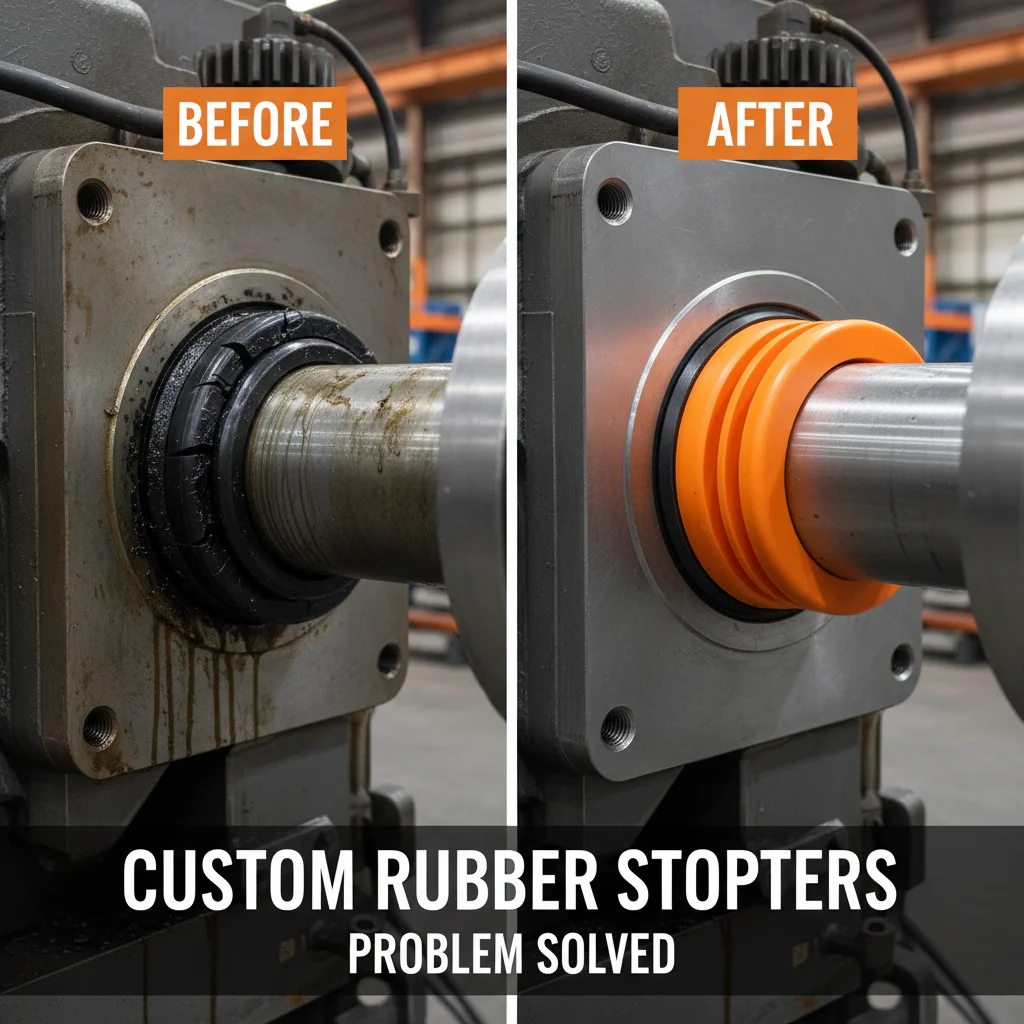
In the demanding world of industrial sealing, the longevity of a system often depends on the smallest components. Wear Resistant O-Rings serve as the primary defense against leaks and mechanical failure, ensuring that fluid power and pressure containment remain stable under extreme operational stress. By minimizing friction and resisting surface degradation, these specialized seals prevent costly downtime in critical machinery.
The global demand for high-performance sealing solutions has surged as industries push the boundaries of temperature and chemical exposure. From the intricate fuel systems of modern diesel engines to the sterile environments of pharmaceutical laboratories, the ability of a seal to withstand constant abrasion and chemical attack is paramount. Failure to select the correct material can lead to rapid wear, resulting in environmental hazards or catastrophic equipment failure.
Understanding the material science behind Wear Resistant O-Rings is essential for engineers seeking to optimize the lifespan of their equipment. By balancing durometer levels, tensile strength, and chemical compatibility, manufacturers can provide seals that not only stop leaks but also endure the harsh realities of industrial friction.

Material Composition of Wear Resistant O-Rings
The effectiveness of wear resistant seals is rooted in the specific elastomer chemistry used during production. For instance, NBR (Nitrile) is renowned for its excellent abrasion resistance and oil-proofing capabilities, making it a staple for hydraulic and fuel systems. In contrast, FKM (Fluoroelastomers) provides superior chemical and heat resistance, though its primary strength lies in enduring aggressive solvents rather than purely mechanical abrasion.
Silicone (VMQ) and EPDM offer different profiles; while silicone is prized for extreme temperature ranges and food-grade safety, its abrasion resistance is generally fair to poor. EPDM serves as a middle ground for weather-proofing and steam resistance. Selecting the right compound ensures that the Wear Resistant O-Rings can withstand the specific friction and chemical environment of the application.
Defining Wear Resistance in Sealing Technology
Wear resistance in the context of O-rings refers to the material's ability to resist surface loss and physical deformation when subjected to repeated sliding motion or compressive stress. In a typical mechanical seal, the ring is squeezed between two surfaces; if the material is too soft or lacks internal structural integrity, the friction will eventually "shave" the rubber away, leading to a loss of sealing pressure.
This property is closely linked to the durometer range—the hardness of the rubber. For example, an NBR ring with a hardness of 90 Shore A will typically offer higher resistance to mechanical wear than one at 50 Shore A. However, the balance must be struck, as an overly hard ring may fail to conform to surface irregularities, creating leak paths despite its wear resistance.
Modern industrial standards, such as ASTM D-2000, categorize these materials based on their resilience and tensile strength. By defining wear resistance through measurable metrics like tear strength and compression set, engineers can predict the lifecycle of Wear Resistant O-Rings and schedule preventive maintenance before a failure occurs.
Key Factors for Long-Term Seal Durability
The longevity of Wear Resistant O-Rings is primarily determined by their chemical compatibility with the surrounding medium. If a seal is exposed to a solvent that causes it to swell or harden, its physical wear resistance is compromised regardless of the initial material grade. For instance, using NBR in a high-ozone environment will lead to cracking, which accelerates mechanical wear.
Temperature stability is another critical factor. High heat can degrade the polymer chains in Wear Resistant O-Rings, making the rubber brittle. Conversely, extreme cold can cause the seal to lose its elasticity, leading to "compression set" where the ring no longer bounces back to its original shape, thereby failing to maintain a seal.
Finally, the surface finish of the mating hardware plays a decisive role. A rough metal surface acts like sandpaper against the elastomer. By utilizing high-precision polishing and choosing Wear Resistant O-Rings with optimal tensile strength, the rate of abrasion is significantly reduced, extending the service interval of the equipment.
Performance Metrics Across Rubber Compounds
To understand which material best suits a specific environment, it is necessary to analyze performance data across various compounds. While NBR dominates in abrasion resistance, FKM is the gold standard for heat and chemical stability. EPDM provides the best sunlight and ozone resistance, whereas silicone is unrivaled in cold-temperature flexibility and food-safety certifications.
Comparing these materials allows designers to optimize for the specific "wear" they expect—whether it is chemical erosion, thermal degradation, or mechanical friction. The following data represents a comparative rating of various rubber types used in high-performance seals.
Comparative Durability Ratings for Sealing Materials
Global Industrial Applications and Use Cases
Across the globe, Wear Resistant O-Rings are integrated into a vast array of critical systems. In the automotive industry, they are indispensable for diesel engines and fuel systems, where NBR and FKM seals prevent leaks under high pressure and exposure to hydrocarbons. In the petroleum industry, these seals are used in reaction vessels and heat exchangers to maintain containment in highly corrosive environments.
Beyond heavy industry, the medical and food sectors rely on food-grade silicone O-rings to ensure sterile seals in appliances like electric kettles and microwave ovens. In remote industrial zones, such as offshore oil rigs or mining sites, the reliability of Wear Resistant O-Rings is a safety requirement, as a single seal failure can lead to environmental contamination or operational shutdowns.
Advantages of High-Grade Wear Resistant Materials
The implementation of high-grade wear resistant materials translates directly into lower total cost of ownership (TCO). While a premium FKM or HNBR seal may have a higher initial price point than a standard nitrile ring, the extended service life reduces the frequency of replacement and the associated labor costs. This is particularly valuable in "blind" installations where replacing a seal requires dismantling an entire machine.
Moreover, enhanced durability increases operational safety. A seal that resists abrasion is less likely to develop micro-leaks that can lead to pressure drops or the escape of hazardous gases. This reliability fosters trust in the equipment's performance, allowing operators to run machinery closer to its theoretical limits without fearing a seal blowout.
From a sustainability perspective, Wear Resistant O-Rings reduce industrial waste. By extending the time between replacements, companies decrease the volume of spent rubber entering landfills and reduce the energy consumed in the production and shipping of replacement parts.
Challenges and Solutions in Seal Maintenance
One of the most common challenges in maintaining sealing systems is the phenomenon of "compression set," where the elastomer permanently deforms and loses its sealing force. This is often exacerbated by improper installation or the use of an incorrect material for the temperature range. To solve this, engineers are moving toward precisely formulated compounds that offer better resilience-rebound characteristics.
Another significant issue is the presence of particulates in the fluid, which act as abrasives that accelerate the wear of the seal. The solution involves integrating dust seal rings or protective rubber caps alongside the primary O-ring to shield the critical sealing surface from contaminants, thereby preserving the integrity of the Wear Resistant O-Rings.
Finally, incorrect sizing remains a frequent cause of premature failure. A seal that is too loose will slide and wear quickly, while one that is too tight may be sheared during installation. Utilizing custom molds and adhering to strict ISO standards for dimensions ensures a perfect fit, which is the foundation for the success of any Wear Resistant O-Rings application.
Technical Comparison of Common Wear Resistant Compounds
| Material Type |
Abrasion Resistance |
Temperature Range |
Primary Application |
| NBR (Nitrile) |
Excellent |
-40°F to 250°F |
Fuel & Hydraulic Systems |
| FKM (Viton) |
Good |
-40°F to 600°F |
Chemical & High Heat |
| Silicone (VMQ) |
Fair to Poor |
-150°F to 450°F |
Food & Medical Grade |
| EPDM |
Good |
-20°F to 350°F |
Outdoor/Weather Seals |
| HNBR |
Excellent |
-40°F to 300°F |
Automotive Timing Belts |
| Custom Blend |
Variable |
Customized |
Specialized Industrial Use |
FAQS
A wear resistant seal is engineered with specific polymer additives and a higher cross-link density to resist surface abrasion and tearing. While standard O-rings provide a basic seal, wear resistant versions maintain their physical dimensions and sealing force longer under constant friction or sliding contact, reducing the rate of material loss.
For high-friction hydraulic systems, NBR (Nitrile) is typically the best choice due to its excellent abrasion resistance and oil-proof nature. If the system also experiences high temperatures, FKM or HNBR are recommended as they combine wear resistance with superior thermal stability, ensuring the seal does not harden or crack.
Silicone is generally not recommended for high-wear or high-friction environments because its tear resistance and abrasion resistance are fair to poor. It is best suited for static seals, extreme temperatures, and food-grade applications where physical abrasion is minimal but chemical purity and thermal stability are required.
Generally, a higher durometer (harder rubber) provides better resistance to mechanical wear and extrusion. However, if the ring is too hard, it may not seal properly against imperfect surfaces. The ideal lifespan is achieved by selecting a hardness that balances mechanical toughness with the elasticity needed to maintain a tight seal.
Preventing premature wear involves three steps: first, ensure the mating surfaces are polished to reduce friction; second, use a compatible lubricant to minimize dry contact; and third, ensure the material is chemically compatible with the fluid to prevent the rubber from swelling or degrading, which accelerates physical wear.
Custom-sized seals are often more effective because they are designed for the specific tolerances of the equipment. A perfect fit prevents the "sliding" or "pinching" that occurs with near-fit standard seals, significantly reducing the mechanical stress on the elastomer and extending the overall service life of the component.
Conclusion
In conclusion, the selection of Wear Resistant O-Rings is not merely a procurement detail but a critical engineering decision that impacts the safety, efficiency, and longevity of industrial machinery. By matching the material properties—such as the abrasion resistance of NBR or the thermal stability of FKM—to the specific operational demands, companies can drastically reduce downtime and operational costs.
Looking forward, the integration of advanced elastomer blends and precision molding will continue to push the boundaries of seal durability. We encourage engineers and procurement specialists to prioritize material compatibility and precise specifications to ensure maximum system reliability. For high-quality, custom sealing solutions, visit our website: www.beikesealing.com