Introduction
Selecting the correct sealing interface often determines the operational lifespan of industrial machinery. When standard gaskets fail to meet specific geometric or chemical requirements, engineers turn to Custom Sealing Sheets to achieve a precise, leak-proof fit. These tailored rubber solutions are not merely fillers but engineered components designed to withstand specific pressures, temperatures, and corrosive agents common in heavy-duty manufacturing.
The criticality of these sheets lies in their material composition. Whether the application involves petroleum oils in automotive systems or steam in food-grade processing, the synergy between the elastomer type and the sheet's physical properties prevents catastrophic fluid loss and equipment downtime. This is where Custom Sealing Sheets integrate with a broader ecosystem of Custom Rubber Parts, including specialized O-rings and elastic gaskets, to ensure comprehensive system integrity.
Understanding the technical nuances of material selection and precision cutting is essential for procurement officers and engineers. This guide analyzes the technical determinants of high-performance sealing, providing a framework for selecting the right materials and partners to optimize sealing reliability. Explore the detailed specifications of Custom Sealing Sheets to ensure your industrial applications remain secure and efficient.

The Fundamentals of Custom Rubber Sealing Sheets

Custom Sealing Sheets are precision-engineered elastomer layers designed to be cut into specific shapes to create airtight or watertight seals between two mating surfaces. Unlike standard O-rings, these sheets allow for complex, non-circular geometries, making them indispensable for large-flange seals, custom gaskets, and protective lining in petrochemical and aviation equipment. They function by filling the microscopic irregularities of the joining surfaces under a specific compression load, creating a physical barrier against fluid migration.
The efficacy of these sheets depends heavily on the compounding process. By adjusting the hardness (ranging from 40A to 90A) and the polymer base, manufacturers can create sheets that are either highly compressible for uneven surfaces or rigid enough to withstand high-pressure hydraulic environments. This versatility ensures that whether the requirement is for a soft food-grade silicone seal or a high-durability FKM sheet, the physical properties are aligned with the mechanical stress of the application.
Critical Determinants of Sealing Sheet Performance
The primary factor influencing the success of a sealing sheet is chemical compatibility. Using an NBR (Nitrile) sheet in an environment exposed to strong ketones would lead to rapid swelling and failure, whereas EPDM is essential for applications involving steam or UV exposure. The material must not only resist the medium it seals but also maintain its elasticity over thousands of thermal cycles to prevent "compression set," where the rubber loses its ability to spring back.
Hardness, measured on the Shore A scale, is the second critical determinant. A lower hardness (e.g., 40A-50A) provides superior sealing on surfaces with poor flatness but may deform under high pressure. Conversely, a high hardness (80A-90A) is required for high-pressure pneumatic seals to prevent extrusion into the gap. Balancing these factors requires a deep understanding of the ASTM D2000 standard to ensure the chosen formula matches the operating conditions.
Finally, the precision of the cut and the thickness uniformity of the sheet play a vital role. Inconsistent thickness across a large sealing sheet can lead to localized under-compression, creating leak paths. Advanced mold design and precision cutting technology ensure that the Custom Sealing Sheets maintain a consistent profile, distributing the sealing force evenly across the entire interface.
Operational Value of Precision Material Matching
Precision material matching transforms a simple rubber component into a strategic asset. When a sealing sheet is perfectly matched to its environment, it reduces the frequency of scheduled maintenance and eliminates the risk of unplanned shutdowns. For instance, using FFKM in extreme chemical processing environments allows for continuous operation where other elastomers would degrade within hours, significantly lowering the total cost of ownership.
The core value of precision matching is the optimization of the seal's lifecycle; by aligning the polymer's molecular structure with the specific chemical stressors—such as utilizing HNBR for H2S resistance—companies can extend the mean time between failures (MTBF) by several orders of magnitude.
Beyond durability, correct material selection improves safety. In the medical and food industries, the use of FDA-approved food-grade silicone ensures that no harmful leachables contaminate the product. This level of material integrity is not just a performance metric but a regulatory requirement that protects the end consumer and the manufacturer's brand reputation.
Comparative Analysis of Elastomer Thermal Ranges
Different synthetic rubbers are engineered to operate within specific temperature windows. While NBR is highly effective for petroleum oils, its upper limit is typically around 250ºF. In contrast, FKM can withstand temperatures up to 390ºF, making it the standard for aerospace and high-heat automotive engine components.
Understanding these limits prevents thermal degradation, which often manifests as hardening or cracking. For the most extreme environments, Perfluoroelastomers (FFKM) push the boundaries up to 600ºF, providing a near-universal sealing solution for the most aggressive media, albeit at a significantly higher cost point.
Maximum Operating Temperature by Material (°F)
High-Demand Application Scenarios for Custom Sheets
In the petrochemical industry, Custom Sealing Sheets are deployed in large-scale heat exchangers and piping manifolds where standard gaskets cannot accommodate the flange geometry. These sheets must resist aromatic hydrocarbons and high pressures, often utilizing NBR or FKM to prevent hazardous leaks in volatile environments.
The aviation and defense sectors utilize these tailored seals for hydraulic actuators and fuel systems. In these scenarios, the rubber must maintain flexibility at extremely low temperatures (down to -40ºF or lower) while resisting degradation from specialized aviation fuels. This requires precision compounding and rigorous testing of physical properties to ensure mission-critical reliability.
Evolution of Synthetic Rubber in Sealing Technology
The trajectory of the synthetic rubber industry has moved toward "specialized performance." Early sealing solutions relied on generic rubber compounds, but modern demands in the medical and electronic sectors have pushed the development of encapsulated O-rings and high-purity silicone. The integration of in-house R&D centers has allowed for the creation of custom formulas that solve specific failures, such as ozone cracking in outdoor machinery.
Technological advancements in precision mold processing have also reduced material waste and increased the dimensional accuracy of the final sheets. This evolution ensures that Custom Sealing Sheets can now meet tighter tolerances, which is essential for the miniaturization of components in the electronics and medical device industries.
Future developments are likely to focus on "smart materials" and bio-compatible elastomers. As industries move toward greener chemistry, the development of rubber compounds that maintain high performance while reducing environmental impact is becoming a priority for leading manufacturers and their global partners.
Overcoming Common Sealing Failure Challenges
The most frequent cause of sealing failure is the "mismatch" between the material and the operating medium. When a seal swells or shrinks excessively, it either loses its sealing force or creates internal stresses that lead to splitting. Identifying the failure mode—whether it is chemical attack, thermal degradation, or mechanical wear—is the first step toward a solution.
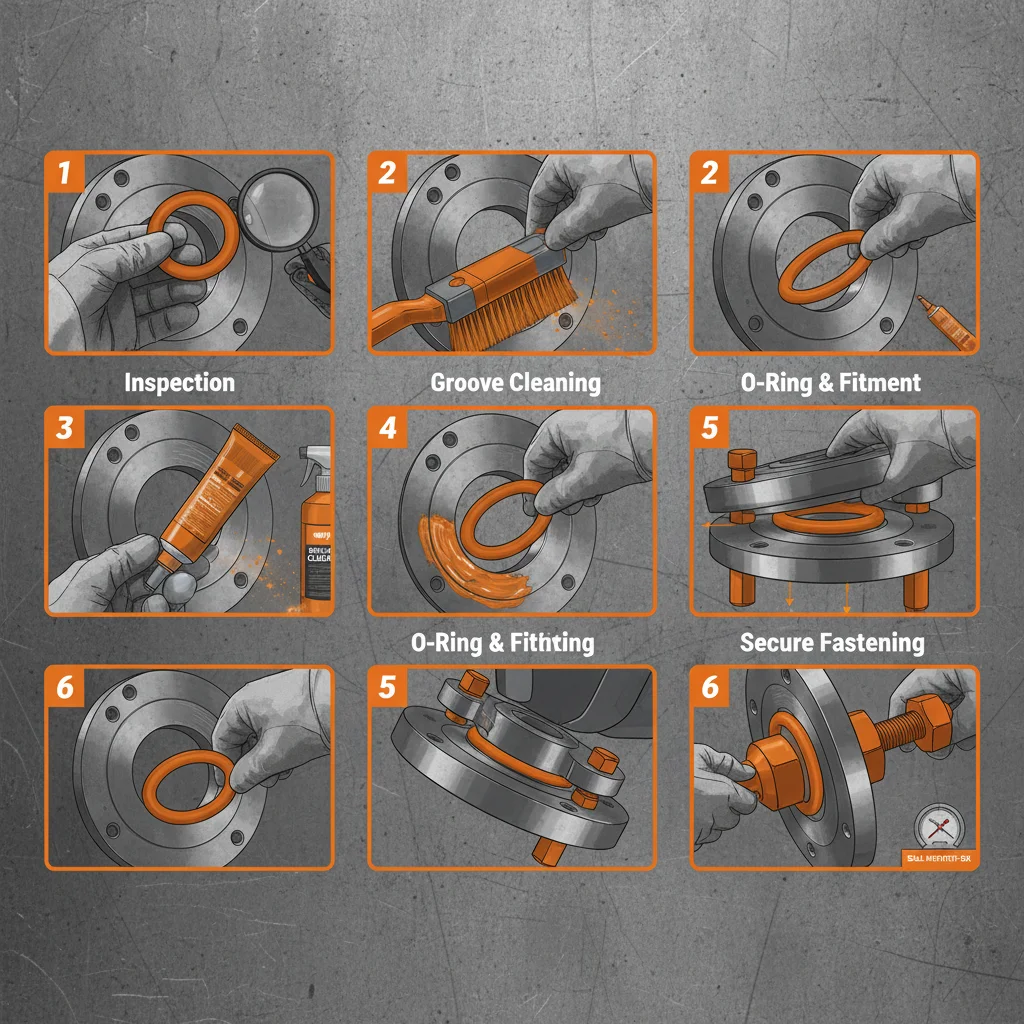
Another common challenge is improper installation torque. Over-compressing a Custom Sealing Sheet can cause the material to flow out of the joint, while under-compression leads to immediate leaks. Providing a clear installation specification based on the material's hardness and the flange's surface finish is critical for ensuring long-term success.
By leveraging professional technology teams for OEM and ODM services, companies can transition from "off-the-shelf" parts to optimized solutions. This approach includes analyzing the working conditions, recommending the ideal elastomer, and creating precise drawings to eliminate the trial-and-error phase of procurement.
Material Selection Guide for Industrial Sealing Sheets
| Material | Temp Range | Best Suited For | Cost Level |
|---|---|---|---|
| Nitrile (NBR) | -40ºF to 250ºF | Petroleum Oils, Gasoline | $ |
| EPDM | -60ºF to 300ºF | Steam, UV, Brake Fluids | $ |
| FKM (Viton) | 0ºF to 390ºF | Silicone Oils, Gasoline | $$ |
| Silicone (VMQ) | -90ºF to 430ºF | Vegetable Oil, Ozone | $$ |
| HNBR | -40ºF to 300ºF | Hydraulic Oils, H2S | $$ |
| FFKM | 0ºF to 600ºF | Most Aggressive Media | $$$$$ |
Frequently Asked Questions
A standard gasket is a pre-manufactured part with a fixed size and material, while a custom sealing sheet is a tailored slab of elastomer engineered for specific chemical and physical requirements. Custom sheets allow for the creation of non-standard shapes and specific hardness levels (40A-90A) that are not available in off-the-shelf products, ensuring a perfect fit for unique industrial flanges and machinery.
Selection depends on three main factors: temperature, chemical exposure, and mechanical stress. For example, EPDM is the best choice for outdoor or steam applications due to its UV and heat resistance, while NBR is superior for oil-based environments. If the application involves extreme heat or aggressive chemicals, FKM or FFKM is recommended. Consulting a technical team to match the material to ASTM D2000 standards is highly advised.
Yes, provided the material hardness is correctly selected. High-pressure systems typically require rubber with higher Shore A hardness (such as 80A or 90A) to prevent the seal from extruding into the gap between the mating surfaces. Additionally, materials like HNBR are often used in hydraulics for their superior strength and resistance to hydraulic fluids compared to standard NBR.
Lead times vary based on whether a mold is required. For items in stock or those not requiring new molds, shipping can happen within 2-7 workdays. For completely custom designs requiring new precision molds, the delivery time typically ranges from 7 to 15 workdays after payment. Prompt shipment is often possible if annual requirements are provided in advance.
Yes, when they are certified as food-grade or medical-grade. Silicone (VMQ) is inherently biocompatible and can be produced to meet RoHS, Reach, and NSF standards. These sheets are ideal for medical devices and food processing equipment because they do not react with organic materials and can withstand the high temperatures required for sterilization processes.
Preventing compression set involves choosing a material with high resilience and ensuring the seal is not operated beyond its maximum thermal limit. Using high-performance elastomers like FKM or properly cured silicone reduces the likelihood of the rubber permanently deforming. Additionally, avoiding over-compression during installation prevents the polymer chains from breaking down prematurely.
Conclusion
The reliability of an industrial system is only as strong as its weakest seal. Custom Sealing Sheets provide the necessary precision and material flexibility to eliminate leaks in the most demanding environments, from petrochemical plants to aerospace engines. By focusing on the intersection of material compatibility, hardness, and dimensional accuracy, enterprises can significantly reduce maintenance costs and enhance operational safety.
Finding a partner with integrated R&D and precision mold capabilities is key to transitioning from generic parts to high-performance solutions. For those seeking durable, certified, and tailored sealing components, visiting www.beikesealing.com can provide the technical support and manufacturing expertise needed to optimize your system's integrity and long-term performance.