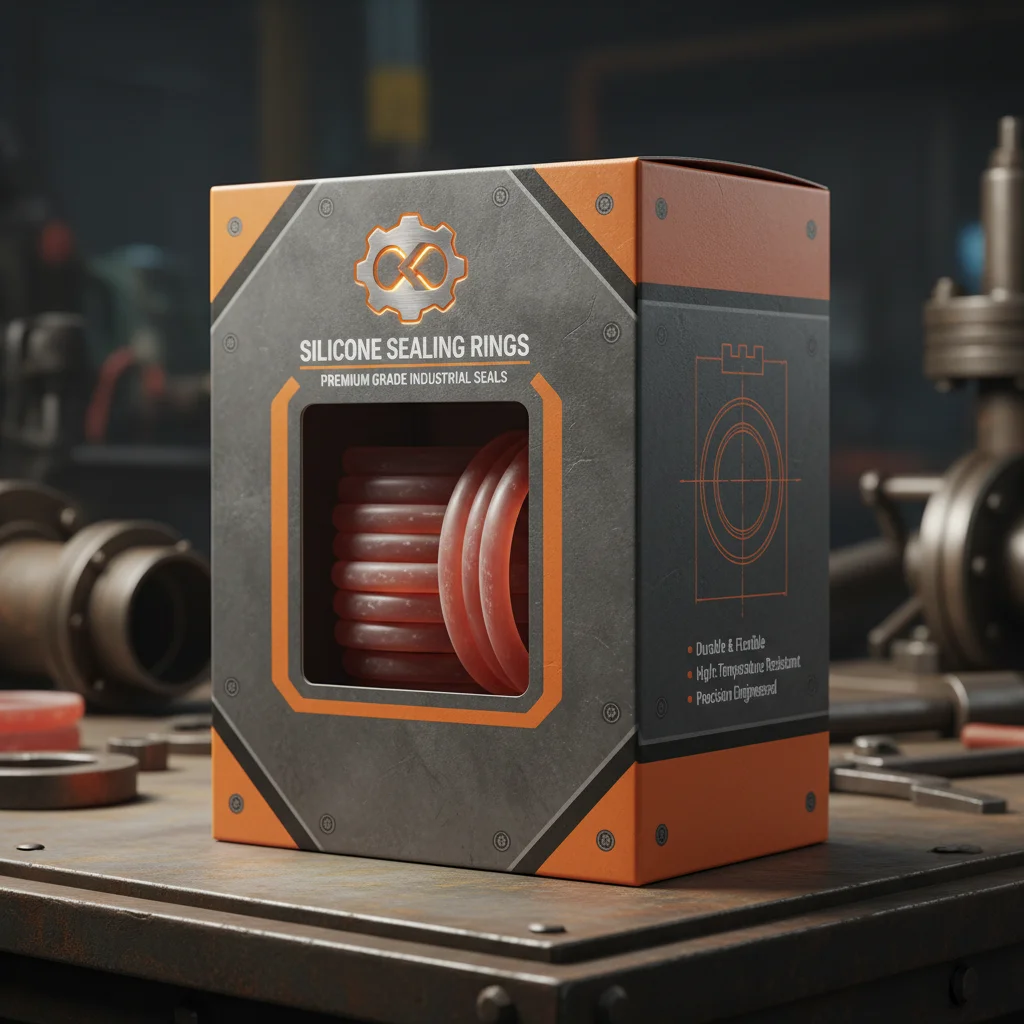
The selection of sealing materials in high-precision engineering often comes down to a critical trade-off between thermal stability and chemical resistance. In demanding industrial environments, Custom FVMQ Seals, derived from fluorosilicone rubber, have emerged as a vital solution for bridging the gap between standard silicone and high-cost fluorocarbons.
The primary technical challenge lies in the simultaneous requirement for low-temperature flexibility and resistance to aggressive fuels or oils. While standard VMQ offers excellent temperature ranges, it fails in the presence of hydrocarbons. This engineering limitation necessitates a precise chemical modification of the silicone backbone, which is exactly what FVMQ provides to critical systems in aerospace and automotive sectors.
This technical analysis explores the material architecture of fluorosilicone elastomers, the critical selection parameters for engineering procurement, and how customized geometries ensure long-term reliability in fluid sealing facilities.

Material Architecture of FVMQ

Fluorosilicone (FVMQ) is a hybrid elastomer that integrates the thermal stability of silicone with the chemical resistance of fluorocarbons. This is achieved by replacing the methyl groups in the siloxane backbone with trifluoropropyl groups.
This specific molecular alteration prevents non-polar solvents, such as gasoline and aviation fuels, from penetrating the polymer matrix. Consequently, the seal maintains its structural integrity and sealing force where standard silicone would swell and fail.
Engineering Selection Parameters
When specifying Custom FVMQ Seals, engineers must first analyze the contacting medium. FVMQ is specifically recommended for environments containing aliphatic and aromatic hydrocarbons, where EPDM or standard VMQ are contraindicated.
Temperature range is the second critical factor. FVMQ typically operates efficiently from -60°C up to 200°C. The ability to maintain a low Glass Transition Temperature (Tg) ensures that the seal does not become brittle in Arctic conditions, which is vital for aviation hydraulics.
Finally, the durometer (hardness) must be matched to the groove design. Available in ranges from 50 to 80 Shore A, the hardness affects the compression set—the ability of the seal to return to its original shape after prolonged deformation.
Performance Trade-offs in Sealing
In sealing engineering, no single material is perfect for every condition. The adoption of fluorosilicone represents a calculated decision to prioritize chemical stability without sacrificing low-temperature flexibility.
To mitigate these mechanical limitations, engineers often employ custom geometries—such as X-profiles or encapsulated designs—to redistribute the load and reduce the friction coefficient during axial movement.
Relative Performance Assessment
Evaluating seal materials requires a multi-dimensional approach. While absolute values vary by formula, a normalized assessment allows procurement teams to compare FVMQ against common industry alternatives like EPDM and FKM.
The following chart illustrates the relative balance of three key engineering metrics: Low-Temp Flexibility, Fuel Resistance, and Mechanical Strength.
Normalized Engineering Assessment Score
Deployment Scenarios
A typical deployment scenario for Custom FVMQ Seals is found in aviation fuel systems. In these environments, the seal must resist aromatic hydrocarbons while remaining functional at altitudes where temperatures drop well below -40°C. Failure in these conditions leads to immediate pressure loss and system compromise.
Another common industrial application is in automotive turbocharger systems. The high-temperature oil exposure combined with rapid thermal cycling makes FVMQ a superior choice over NBR, as it prevents the hardening and subsequent leakage often seen in standard nitrile seals.
Evolution of Elastomer R&D
The future of high-performance sealing is moving toward "intelligent" material blends. Researchers are currently exploring the integration of nano-fillers into FVMQ matrices to address the inherent weakness in tear strength and abrasion resistance.
Moreover, there is a growing industry shift toward more sustainable curing agents. The reduction of volatile organic compounds (VOCs) during the molding process of fluorosilicone is becoming a regulatory requirement in the European and North American markets.
As additive manufacturing (3D printing) matures, we expect to see the rise of complex, non-standard FVMQ geometries that were previously impossible to achieve via compression or injection molding, allowing for tighter tolerances in bespoke aerospace components.
Configuration Comparison Matrix
Selecting the correct seal configuration requires matching the profile and material grade to the specific operating environment. Not all FVMQ seals are created equal; different curing methods and fillers alter the final physical properties.
Procurement managers should evaluate a combination of compression set, volume swell, and cost-to-life ratio when deciding between different configuration profiles.
The matrix below provides a comparative framework for evaluating different seal profiles based on common industrial requirements.
| Configuration Type | Primary Benefit | Operating Factor | Recommended Use Case |
|---|---|---|---|
| Standard O-Ring | Universal Fit | Static Seal | General Fluid Sealing |
| X-Profile Seal | Reduced Friction | Low-Speed Dynamic | Piston Dampers |
| Custom Flat Gasket | High Surface Area | Static Compression | Flange Connections |
| Encapsulated FVMQ | Extreme Chemical Resistance | Aggressive Media | Chemical Processing |
| High-Durometer Profile | Extrusion Resistance | High Pressure | Hydraulic Manifolds |
| Low-Temp Specialized | Arctic Flexibility | Extreme Cold | Aviation Exterior Seals |
Engineering FAQ
The fundamental difference is chemical resistance. VMQ (standard silicone) has excellent thermal properties but swells and degrades rapidly when exposed to fuels, oils, and non-polar solvents. FVMQ (fluorosilicone) incorporates fluorine atoms into the polymer chain, which provides high resistance to hydrocarbons while retaining the broad temperature operating range of silicone.
FVMQ is suitable for moderate pressure, but its lower tear strength and abrasion resistance compared to FKM or NBR make it less ideal for high-speed dynamic sealing. For high-pressure scenarios, it is recommended to use high-durometer configurations or support rings to prevent seal extrusion into the clearance gap.
FVMQ significantly outperforms FKM in low-temperature environments. While FKM typically becomes rigid around -20°C to -10°C (depending on the grade), FVMQ remains flexible down to -60°C. This makes FVMQ the mandatory choice for seals exposed to high-altitude aviation or polar climates.
The most common failures are mechanical in nature, such as tearing during installation or wearing down due to friction in dynamic applications. Because FVMQ is "softer" than fluorocarbon rubbers, improper groove tolerances or sharp edges in the assembly can lead to premature physical failure.
Quality verification should focus on ASTM D2000 standards. Key tests include volume swell tests in a representative fluid, hardness testing via Shore A durometer, and compression set analysis. Ensuring the material is sourced from reputable suppliers like Dow Corning or Wacker ensures batch-to-batch consistency.
FVMQ is highly compatible with mineral oils, synthetic hydrocarbons, and most fuels. However, it can be sensitive to certain highly polar solvents or concentrated strong acids. Always verify the specific lubricant's chemical compatibility matrix before final deployment.
Strategic Summary for Seal Procurement
The transition to Custom FVMQ Seals is an engineering decision based on the need for simultaneous low-temperature resilience and hydrocarbon resistance. While it offers an unparalleled thermal-chemical balance, the user must account for its lower mechanical durability by optimizing seal geometry and surface finishes.
For industrial enterprises, the practical implication is clear: leveraging FVMQ in critical fluid paths reduces the risk of catastrophic leakage in extreme environments. By aligning material specifications with actual operating stresses, companies can significantly extend the service life of their machinery and reduce unplanned maintenance downtime.