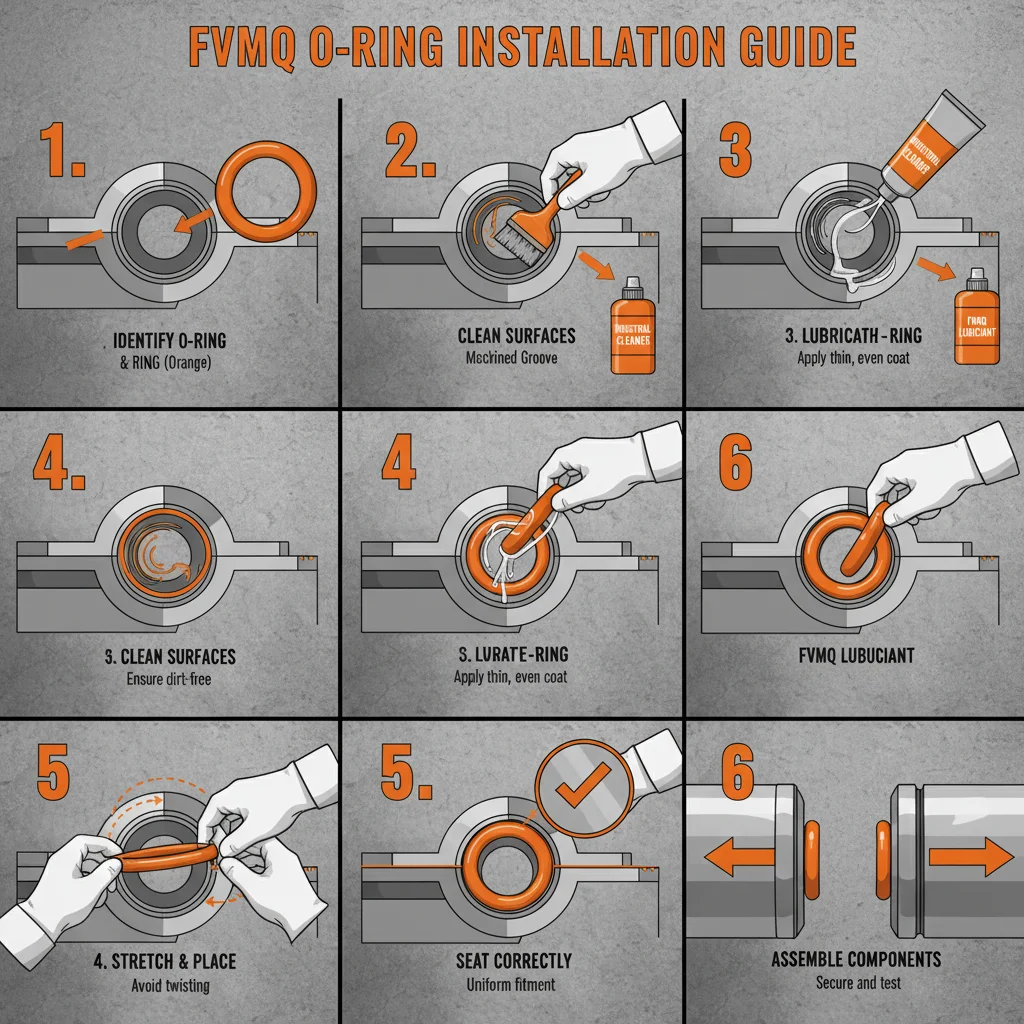
In the demanding world of industrial sealing, the longevity of a component often dictates the efficiency of an entire production line. Anti-aging Rubber Seals represent a critical engineering solution designed to combat the natural degradation of elastomers caused by heat, ozone, and chemical exposure. By utilizing advanced polymer blends and stabilization techniques, these seals ensure that critical junctions remain leak-proof over extended operational lifecycles, reducing the risk of catastrophic failure.
Across global sectors—from automotive fuel systems to petrochemical refineries—the battle against material aging is constant. Standard rubber components often succumb to "dry rot" or hardening, leading to costly downtime and safety hazards. The integration of high-performance materials like Nitrile Rubber (NBR) and EPDM allows for the creation of seals that maintain their elasticity and sealing force even under extreme thermal cycling and corrosive environments.
Understanding the science behind anti-aging properties is not merely a technical requirement but a strategic commercial advantage. By implementing Anti-aging Rubber Seals, enterprises can significantly extend maintenance intervals, lower the total cost of ownership, and adhere to stringent international quality standards such as IATF 16949 and ISO 9001, ensuring operational reliability in the most challenging conditions.

The Engineering Fundamentals of Anti-aging Rubber Seals
The core of Anti-aging Rubber Seals lies in the chemical stabilization of the polymer chain. Aging in rubber is typically caused by the breaking or uncontrolled cross-linking of polymer bonds, often triggered by oxygen, ozone, or UV radiation. To prevent this, engineers introduce antioxidants and antiozonants during the compounding process, which act as sacrificial agents that neutralize free radicals before they can attack the rubber matrix.
Beyond chemical additives, the physical structure of the seal plays a vital role. Proper vulcanization ensures a stable network of sulfur or peroxide bridges, which prevents the material from becoming overly brittle over time. By controlling the cure rate and temperature, manufacturers can produce seals that maintain a consistent 70 Shore hardness, ensuring the component recovers its shape after compression—a key requirement for preventing leaks in high-pressure hydraulic systems.
Material Selection for Long-Term Durability
Selecting the right elastomer is the first line of defense against premature aging. Nitrile Rubber (NBR), for instance, is the industry standard for applications involving petroleum-based fuels and lubricants. Its inherent resistance to oil prevents the swelling and softening that typically lead to seal failure in fuel tanks and oil reservoirs. However, the durability of NBR is highly dependent on the acrylonitrile content, which balances oil resistance with low-temperature flexibility.
For environments where weather, ozone, and sunlight are the primary threats, EPDM (Ethylene Propylene Diene Monomer) is the superior choice. Unlike NBR, EPDM possesses an unsaturated backbone that is nearly immune to ozone attack, making it indispensable for outdoor seals and automotive weatherstripping. The ability to withstand temperatures from -55°C to 150°C ensures that these seals do not crack during winter freezes or degrade under intense summer heat.
The decision between these materials often involves a trade-off. While EPDM offers unmatched weather resistance, it fails miserably in the presence of mineral oils. Conversely, NBR excels in oil environments but struggles with ozone. Therefore, the engineering of Anti-aging Rubber Seals requires a precise analysis of the fluid media—whether it be gasoline, silicone grease, or glycol hydraulic oil—to match the polymer to its specific environmental stressor.
Environmental Resistance and Chemical Stability
To achieve true longevity, Anti-aging Rubber Seals must demonstrate exceptional chemical stability. In the petrochemical industry, seals are frequently exposed to aggressive solvents and diester lubricating oils. A seal that cannot resist these chemicals will undergo rapid leaching of its plasticizers, leading to shrinkage and a subsequent loss of sealing pressure.
The integration of high-grade raw materials from suppliers like JSR and LANXESS ensures that the polymer matrix is consistent. This consistency is critical because impurities in the rubber compound can act as catalysts for oxidation, accelerating the aging process and creating microscopic fissures that eventually lead to systemic leakage.
Furthermore, temperature fluctuations induce thermal fatigue. Anti-aging seals are engineered to operate within specific windows (e.g., -40°C to 120°C for standard NBR O-rings) to ensure that the material neither crystallizes at the low end nor thermally decomposes at the high end. This thermal stability is what allows these components to serve reliably in aviation and national defense applications.
Performance Metrics and Quality Validation
Measuring the efficacy of Anti-aging Rubber Seals requires rigorous empirical testing. The primary metric used is the "Compression Set," which measures the seal's ability to return to its original thickness after being compressed for a set period at a specific temperature. A low compression set indicates superior anti-aging properties, as it proves the material has not undergone significant permanent deformation.
Quality validation is further reinforced through certifications such as IATF 16949 and ISO 9001. These standards mandate a strict quality control system, from the inspection of imported raw materials to the final dimensional check of the finished O-ring or gasket. This systemic approach ensures that every batch of seals meets the ASTM D2000 standard, providing users with a predictable service life.
Performance Comparison of Anti-aging Rubber Seals Materials
Global Industrial Applications and Use Cases
The application of Anti-aging Rubber Seals spans nearly every modern industrial sector. In the automotive industry, they are critical for fuel injection systems and braking assemblies where failure could lead to immediate safety risks. In the medical field, food-grade silicone seals provide a sterile, non-reactive barrier that resists aging during repeated sterilization cycles in autoclaves.
Beyond consumer goods, these seals are vital in remote industrial zones, such as offshore oil rigs and mining operations. In these environments, the combined assault of salt spray, extreme pressure, and hydrocarbon exposure makes standard rubber obsolete. By utilizing custom-engineered gaskets and X-profile seals, operators can ensure that hydraulic systems remain pressurized, preventing environmental contamination and maintaining operational continuity.
Overcoming Common Degradation Challenges
One of the most persistent challenges in sealing technology is "compression set," where a seal loses its "spring-back" ability over time. This is often exacerbated by extreme heat, which accelerates the chemical aging of the rubber. To overcome this, engineers use higher-quality cross-linking agents and optimize the molding process to ensure a more uniform molecular structure, allowing the seal to maintain its interface pressure for years rather than months.
Another critical issue is ozone cracking, particularly in parts exposed to the atmosphere. Ozone attacks the double bonds in the rubber chain, creating deep cracks perpendicular to the direction of stress. The solution implemented in Anti-aging Rubber Seals is the addition of paraffin waxes. These waxes migrate to the surface of the seal, forming a physical protective film that prevents ozone from reaching the polymer.
Finally, chemical incompatibility remains a common cause of premature aging. When a seal is exposed to a fluid it wasn't designed for, it may swell or shrink rapidly. The professional approach is to conduct rigorous fluid compatibility tests before deployment, ensuring that whether the media is water, silicone oil, or petroleum hydraulic oil, the chosen rubber grade remains stable.
Future Innovations in Elastomeric Sealing
The future of Anti-aging Rubber Seals is moving toward "smart materials" and nano-composites. By integrating carbon nanotubes or graphene into the rubber matrix, researchers are finding ways to significantly increase thermal conductivity and mechanical strength, which in turn reduces the localized heat buildup that accelerates aging. This allows seals to operate in even more extreme temperatures without sacrificing elasticity.
Sustainability is also driving innovation. The industry is shifting toward bio-based elastomers and recyclable rubber compounds that maintain the same anti-aging properties as traditional petroleum-based NBR or EPDM. This transition not only reduces the carbon footprint of manufacturing but also meets the increasing global demand for green energy and eco-friendly industrial components.
Furthermore, digital transformation is impacting quality control. The use of AI-driven predictive modeling allows manufacturers to simulate the aging process of a seal over 10 years in a matter of hours. By analyzing the interaction between the polymer and the specific chemical environment of the client, companies can now provide a "predicted lifespan" for their seals, moving from reactive maintenance to a proactive, data-driven replacement strategy.
Comparison Analysis of Anti-aging Rubber Seal Material Properties
| Material Type |
Anti-Aging Driver |
Primary Weakness |
Lifespan Rating |
| NBR (Nitrile) |
Acrylonitrile Content |
Ozone/UV Exposure |
7/10 |
| EPDM |
Saturated Backbone |
Mineral Oil Contact |
9/10 |
| FKM (Viton) |
Fluorinated Bonds |
High Material Cost |
10/10 |
| Silicone |
Si-O Backbone |
Mechanical Wear |
8/10 |
| CR (Neoprene) |
Chlorination |
Moderate Oil Res. |
7/10 |
| Custom Hybrid |
Synergistic Blending |
Complex Processing |
9/10 |
FAQS
Rubber aging is primarily caused by oxidation and ozonolysis. Oxygen and ozone attack the polymer chains, breaking them down or causing excessive cross-linking. This results in the material becoming hard and brittle (loss of elasticity) or developing surface cracks. Heat accelerates these chemical reactions, while UV light provides the energy to trigger the breakdown, eventually leading to a loss of sealing pressure and leaks.
The most common signs of aging are "crazing" (tiny surface cracks), visible hardening, or a change in color. In a functional sense, if a seal begins to weep fluid or if it no longer bounces back when compressed, it has likely suffered from a high compression set. We recommend periodic inspections and using a durometer to check if the hardness has deviated significantly from the original 70 Shore specification.
It depends entirely on the environment. For anti-aging against weather, ozone, and sunlight, EPDM is far superior. However, for anti-aging in the presence of oils, fuels, and greases, NBR is the correct choice. Using EPDM in an oil-rich environment will cause it to swell and fail almost immediately, while using NBR outdoors will lead to rapid ozone cracking. Matching the material to the medium is the only way to ensure longevity.
No, anti-aging agents must be integrated into the rubber compound during the mixing and vulcanization process. They are part of the chemical matrix of the material. Once a seal is cured and molded, surface treatments can provide some temporary protection, but they cannot reverse internal degradation or change the fundamental aging properties of the polymer.
IATF 16949 is a rigorous automotive quality standard that ensures every step of production is documented and controlled. For anti-aging seals, this means the raw material purity is verified, the curing temperature is precise, and each batch is tested for consistency. This eliminates the "luck of the draw" and ensures that the seals you receive have a predictable and reliable service life.
Yes, provided they are manufactured using the same high-grade compounding process. Whether it is a standard JIS size O-ring or a complex custom-molded gasket, the anti-aging properties are determined by the rubber formula and the vulcanization process, not the size. At Beike Sealing, we apply the same ASTM D2000 standards to both our standard and custom product lines.
Conclusion
In conclusion, Anti-aging Rubber Seals are an indispensable component of modern industrial reliability. By combining the correct elastomer selection—such as NBR for oil resistance or EPDM for weatherproofing—with advanced chemical stabilizers and rigorous quality control standards like ISO 9001, enterprises can effectively neutralize the threats of oxidation, ozone, and thermal degradation. The result is a significant reduction in maintenance costs, improved safety, and enhanced operational efficiency across the globe.
As we look toward the future, the integration of nano-composites and AI-driven lifespan prediction will further refine our ability to combat material aging. For any organization operating in challenging environments, the move toward high-performance, anti-aging sealing solutions is not just a technical upgrade but a strategic investment in long-term stability. We invite you to explore our full range of custom and standard sealing solutions to optimize your system's longevity. Visit our website: www.beikesealing.com